written by Saniya Kale
By now, most of us know just how beautiful and culturally significant Kansai’s temples and shrines are. But have you ever thought about experiencing them at night? No, this isn’t a recommendation to wander blindly through temples in pitch darkness, stumbling around until you accidentally fall into a garden pond. Instead, I’m here to shed some light (pun intended) on one of Kansai’s most beautiful seasonal experiences: autumn illuminations.
Wait, can you visit temples at night?
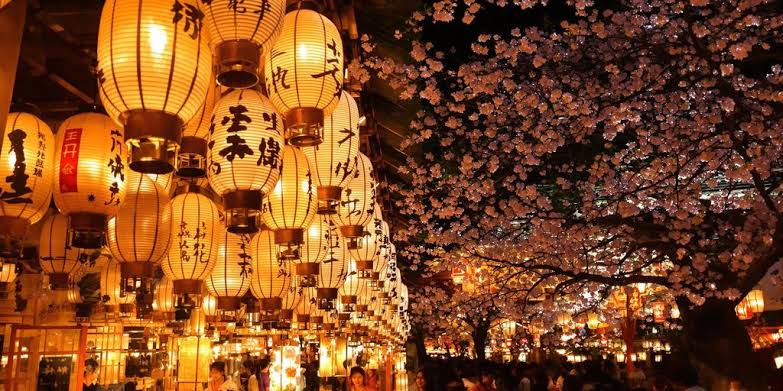
Every autumn, the Kansai region hosts illuminations in its gardens, historical districts, and, most notably, its temples. Many temples offer special nighttime viewings, allowing visitors to experience their beauty in a whole new light. These viewings take place from late October through mid-December, highlighting the autumn foliage in their surrounding gardens. Mid-November is an ideal time to visit as the leaves begin changing color, but the illuminated temples offer a unique experience regardless.
More than just light
Japan is known for its lanterns and lights, brightening up cities after sunset. Take a stroll through Gion around dusk, and you’ll see lanterns glowing along the traditional streets, maybe even helping you catch a glimpse of a geiko or maiko.
While some lanterns simply illuminate streets and businesses, or provide an old-fashioned flashlight to help locate the nearest Izakaya, others hold cultural and spiritual significance rooted in Buddhism and Shintoism. At temples and shrines, lanterns have traditionally served as offerings of light, symbolizing devotion, warding off evil, and in some cases guiding spirits during certain festivals.
Today, Kansai’s autumn illuminations bring a different kind of experience, beyond lanterns, highlighting the landscape, colorful foliage, and sometimes manipulating the architectural structure. While these seasonal exhibitions aren’t necessarily religious traditions, they provide another way to appreciate Japan’s cultural landmarks after dark, bringing attention to details and shadows that might otherwise go unnoticed during the day. But if one of those shadows turns out to be a ghost, that’s a risk you have to be willing to take.
Top 3 Temple Autumn Illumination Recommendations
There are plenty of reasons to visit temple illuminations, whether it’s to immerse yourself in spirituality, have an existential crisis surrounded by lights, or simply appreciate how each temple brings its own interpretation of light and art to life. Each temple offers something unique. Some illuminations even draw inspiration from the temple’s religious significance, using light to highlight the meaning and devotion associated with the deities or Buddhist figures honored there. Whatever your preference, below are some must-see Autumn Illuminations to visit during your time in Japan.
Kodai-ji/Entokuin Temple
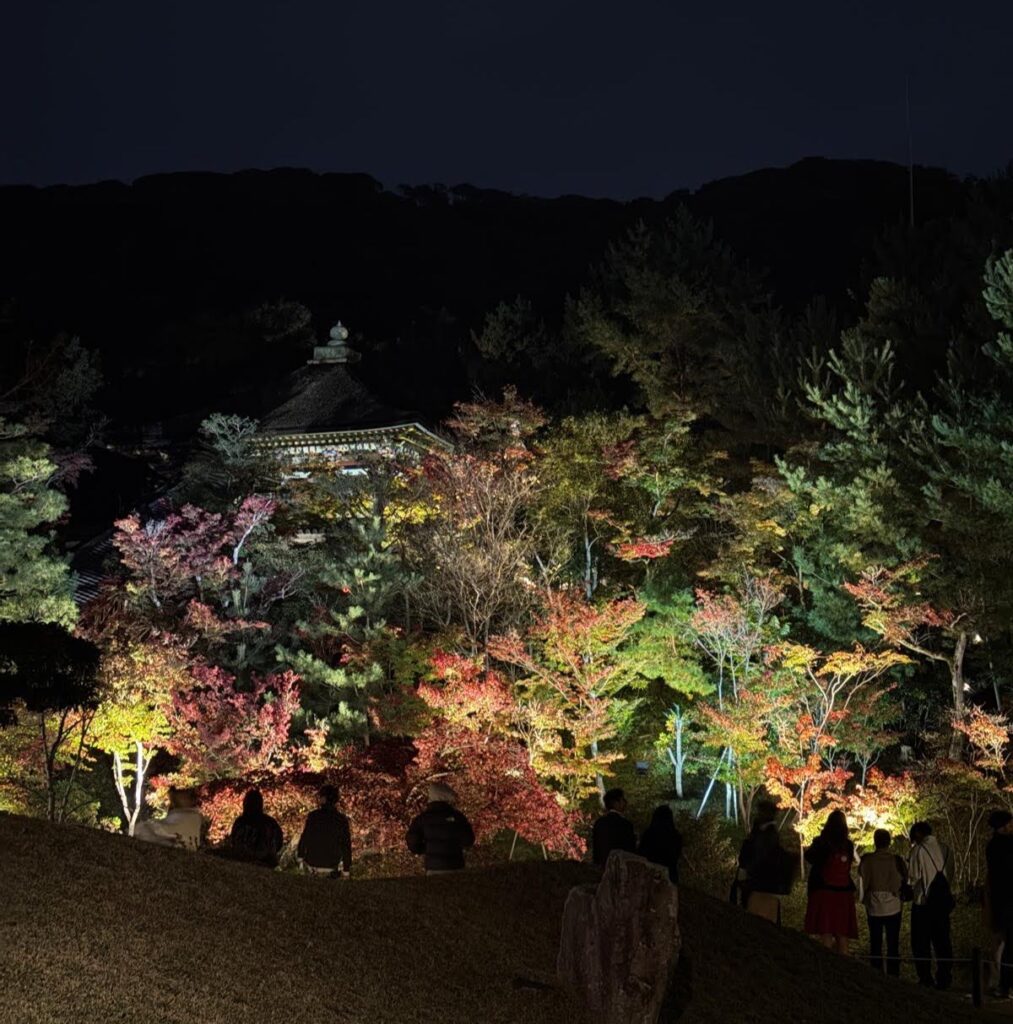
The Kodai-ji/Entokuin Zen Garden Landscape showing is perfect for those who want a calm and romantic illumination experience (don’t worry, self-love is just as romantic). Kodai-ji is as Zen Buddhist temple founded in 1606 by Nene in memory of her husband Toyotomi Hideyoshi, the man who ruled Japan during the 16th century. Hidden in its beautiful gardens you will find a small bamboo forest, my personal favorite substitute for the Arashiyama Bamboo Forest. The autumn illumination features light projections altering the temples architecture as seen above, reflecting autumn leaves from the pond and creating a wonderland-like experience in the bamboo forest. You can also visit the Entokuin temple, where Nene spent her later years next door.
The Kōdai-ji Autumn Nighttime Special Viewing runs from October 23 to December 13, 2026 in Kyoto, with the lights turning on from 5:00 PM to 10:00 PM and last entry at 9:30 PM.
Kiyomizu-dera Temple
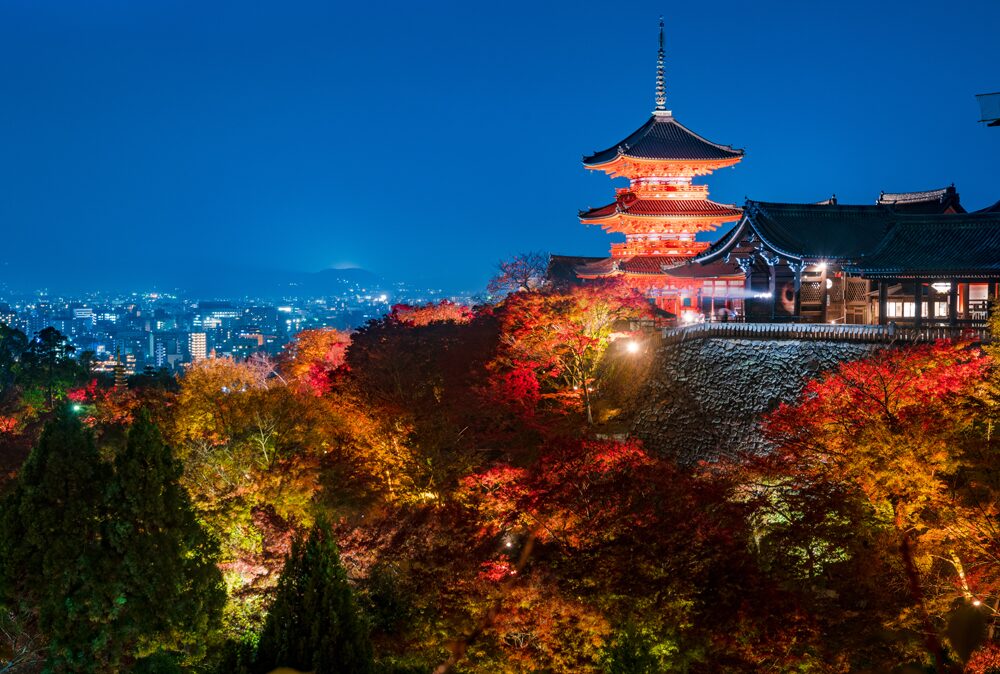
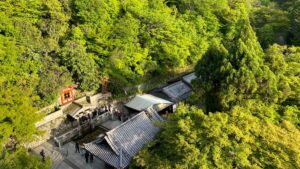
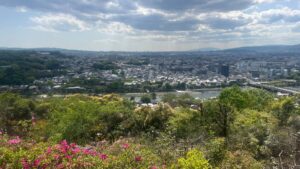
The Kiyomizu-dera Temple is a popular spot for a reason with its massive temple grounds, views that overlook the city, and 13-meter-high wooden terrace, it’s no wonder millions of visitors rush to view this temple. The Autumn illuminations only amplify this experience. This temple was founded in 778, Kiyomizu-dera is one of Kyoto’s most famous Buddhist temples, dedicated to Kannon, the bodhisattva of compassion. The temple describes its autumn illumination with the phrase, “The Kannon’s merciful light shines upon the night sky of Kyoto.”.
The Kiyomizu-dera Autumn Special Night Viewing runs from November 21 to November 30, 2026 in Kyoto, with the lights turning on around 5:00 PM to 9:30 PM, with the last entry at 9:00 PM. Although the temple does get quite busy, I would say the elevated terrace and skyline view makes it worth it. However, to avoid the biggest crowds, try arriving early or later in the evening, around 8:00 PM.
Katsuo-ji Temple
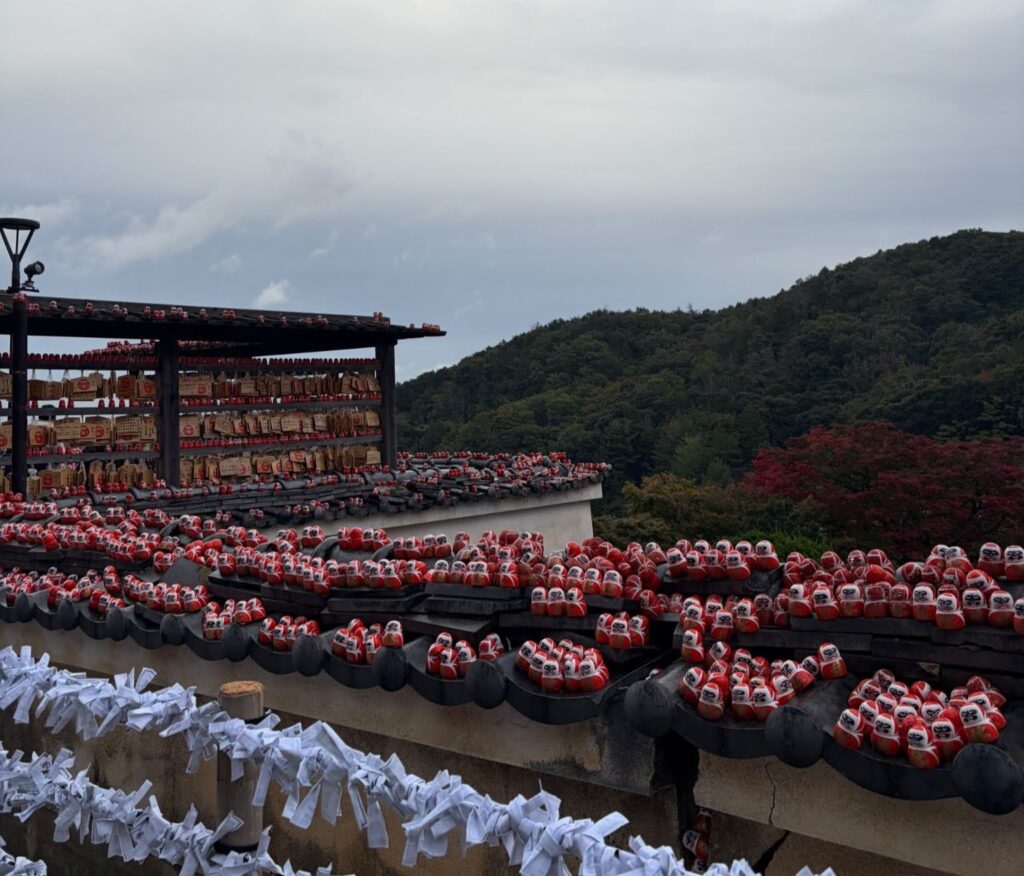
Located just an hour away from the city center is Katsuoji Temple in Minoh Osaka, known as the “Temple of Victory” for being flooded by Daruma dolls and picture-perfect spots surrounded by mountains, trees, and nature. The autumn illumination, called Kinshū no Yoimairi, features illuminated mist rising from the pond, glowing Daruma displays, and of course, beautiful maple trees. You can also make a stop at the beautiful Minoh Falls before heading to the temple.
You can visit this temple’s exhibition only on select dates in November, during weekends and holidays, including Monday, November 23rd, with the last entry at 8:30 PM.
Bonus: NAKED meets Nijo-jo Castle
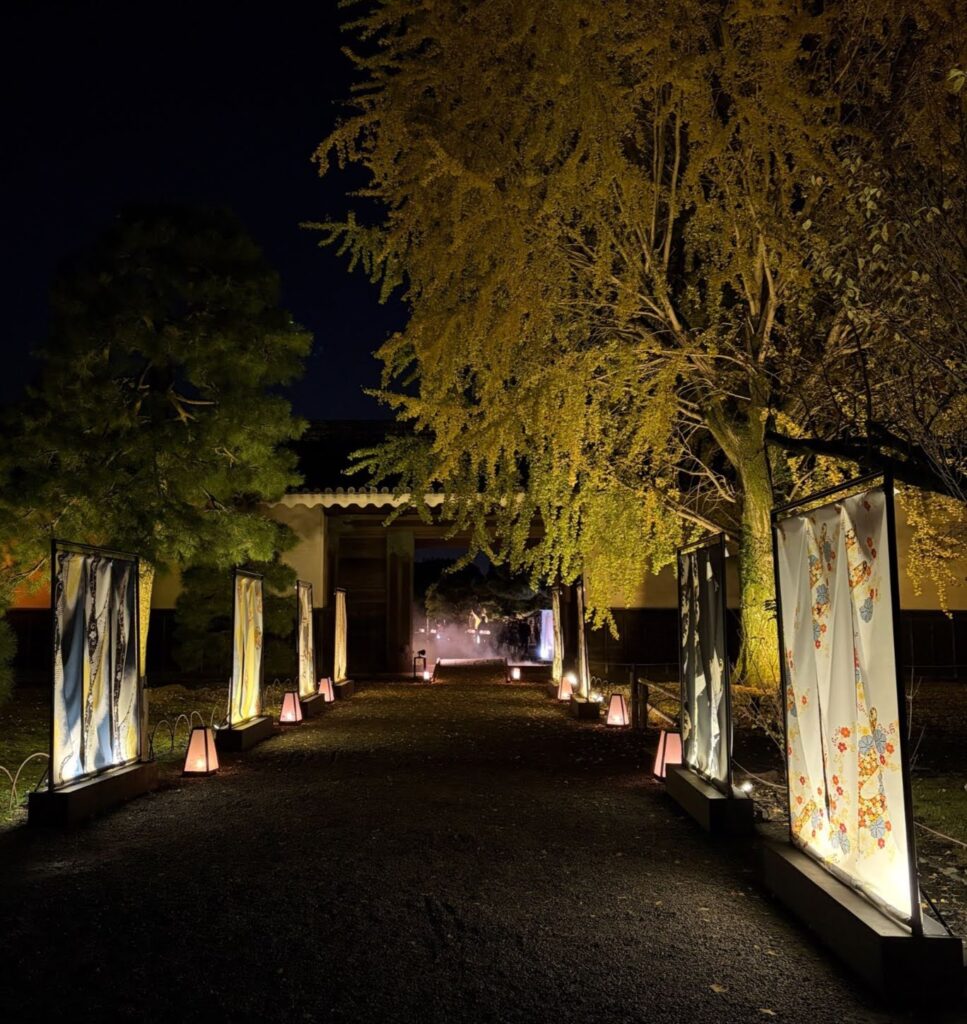
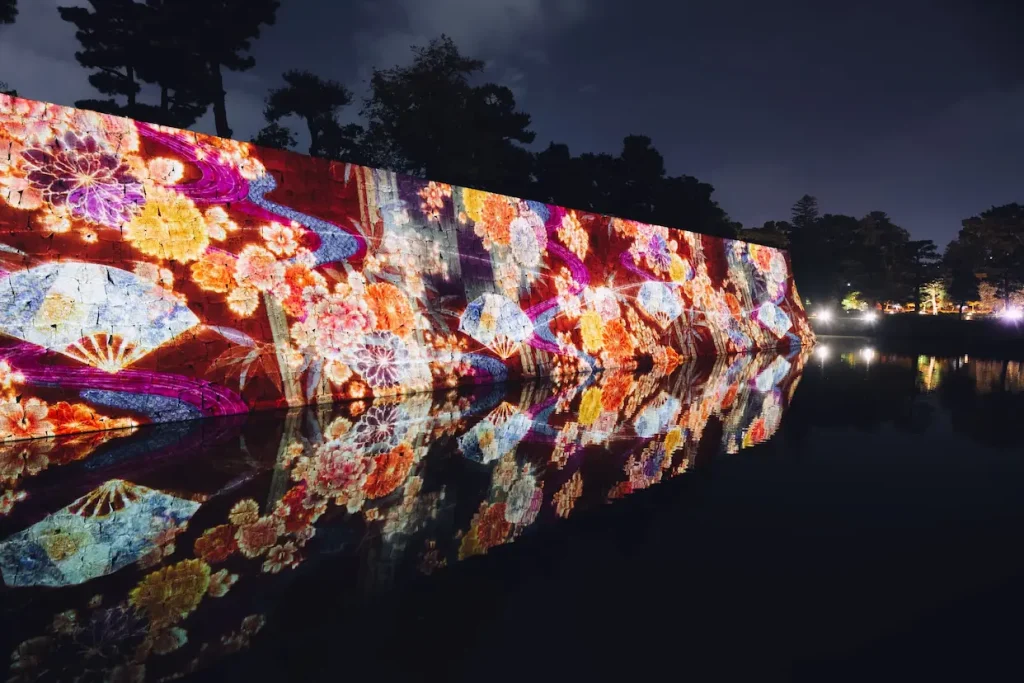
Now, this next spot isn’t a temple, but I felt it was worth including on this list, especially for art and design lovers. Built in 1603 as the residence of Japan’s first Tokugawa shogun, Nijō Castle is a UNESCO World Heritage Site known for its gardens, historic architecture, and famous “nightingale floors” that chirp when you walk on them. Its illumination offers a full sensory experience, featuring colorful physical light installations, and projections that use the reflection off the water and decorate the castle’s architecture. This year, the exhibition, called NAKED meets Nijo-jo Castle, uses contemporary art to explore the aesthetics of Kan’ei culture, a period that influenced Japanese design, including the Kimono.
This viewing runs from October 23 to December 5, 2026 in Kyoto, 6:00 PM to 10:00 PM, with the last entry at 9:00 PM.
Your Kansai Night Awaits
You can never go wrong with nighttime illuminations, especially in such sacred places. Plus, you get to appreciate temples at dark without worrying about staying dry.
However, if you’re looking for someone to share this experience with, or a place to stay during your time in Kansai, I recommend staying at Osaka English House. This guesthouse hosts a variety of events every day, whether it’s Japanese classes, movie nights, or group trips around Kansai, making it the perfect place to meet fellow travelers and find someone to experience these magical illuminations with. And who knows? You might just leave with a few new friends and some beautiful memories about Kansai after dark.
FAQs: Visiting Temple Autumn Illuminations in Kansai
If you wish to have a more in depth guide to viewing these Autumn Illuminations for 2026, including a self – guided itinerary, routes, timing and tips, I recommend reading: Kyoto Autumn Illuminations 2026: A Practical Night-Viewing Guide for Self-Guided Travelers.
It depends on the temple or illumination event. Many temples allow visitors to purchase tickets at the entrance, while special exhibitions and installations may offer or require advance reservations. I recommend checking the official website before visiting.
Try visiting on weekdays rather than weekends or public holidays. Arriving when the illuminations first begin or later in the evening may also help avoid the busiest periods. Keep in mind that popular temples, especially Kiyomizu-dera, can still get crowded during peak autumn foliage season.
Photography is generally allowed in outdoor illumination areas! However, some temples restrict photography in certain buildings or sacred spaces, and tripods, flash photography, and selfie sticks may be unaccepted. Always check the rules and be mindful of other visitors. You can read more in the Kyoto City Official Guide
Thank you for the compliment! 🙂 I have plenty! You can also visit Choin-in Temple and/or To-ji Temple in Kyoto or Murouji Temple in Nara. You can also view more recommendations in the link provided in question 1.