written by Ellie Elizabeth
Oshogatsu, or Japanese New Year, lasts three days, from 1st to 3rd January. This holiday is incredibly important, with various traditions and ceremonies leading up to and during it. With Kansai bursting with traditional and modern Japanese culture, you’ll quickly understand why it is the best place to experience New Year.
Key Takeaways
- Oshogatsu celebrates the New Year and takes place from January 1st to 3rd.
- Kansai has many shrines to experience Hatsumode, the first shrine visit of the year
- Osechi Ryouri and Toshikoshi Soba are amazing New Year’s meals to dive into
Oshogatsu Traditions
Nengajo
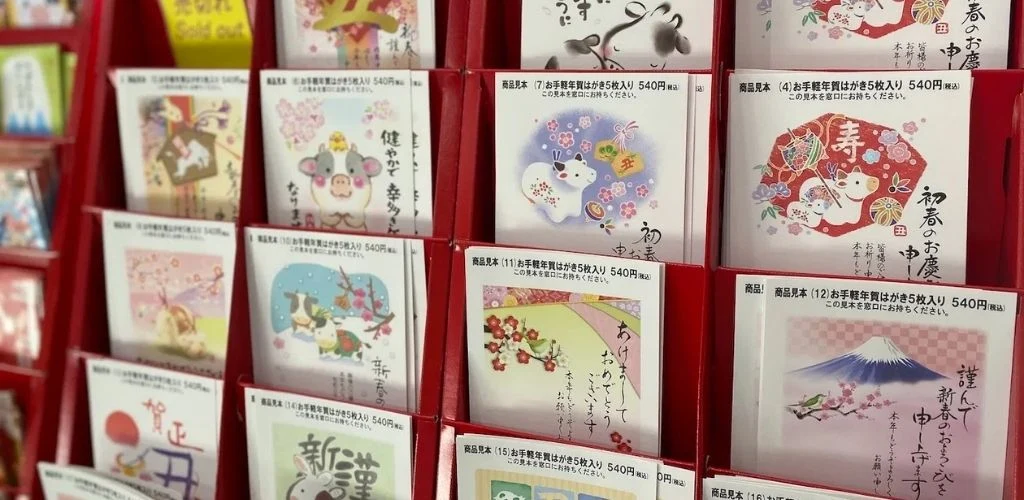
Nengajo are New Year’s cards typically sent to friends, family, and colleagues in the weeks leading up to Oshogatsu. Whilst this isn’t a common practice in the West, where Christmas cards are usually sent, nengajo are used as a way to thank others and wish them good luck for the coming year.
Osouji
Osouji, or “big cleaning”, is completed by 31st December. People deep-clean and declutter their homes, workplaces, and schools. Seiketsu (cleanliness) is deeply rooted in Japanese culture, representing kiyome (purity) and seiso (orderliness), and this osouji symbolises starting the year fresh and pure.
Otoshidama
Otoshidama is money given in small, special envelopes from adults to children, like Christmas money from your grandparents. This carries the blessings from families to their children at the start of the New Year.
Hatsumode
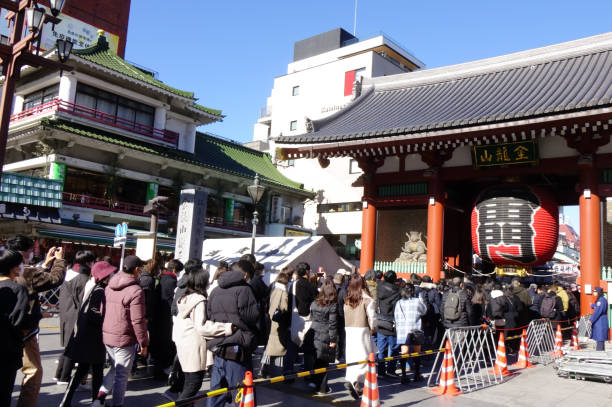
The first sunrise of the year is thought to promise good luck, so on the night of the 31st December people visit shrines or scenic spots to watch the sunrise.
For many, this counts as hatsumode, the first shrine visit of the year. The tradition lasts for the first three days of the year, when people pray for an auspicious new year. Visitors buy omamori, protective charms and omikuji, fortune slips which predict the year. Omikuji cost 100-500 yen, with the best fortune called daikichi.
Oshogatsu Food
Osechi Ryouri
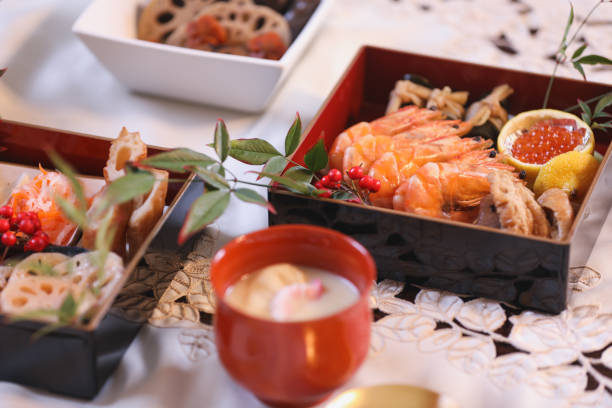
Osechi Ryouri are New Year’s dishes served in tiered lacquer boxes and are said to have a different meaning. These dishes are either bought or prepared by family in the lead-up to the New Year, before they are eaten from the 1st to the 3rd of January.
Toshikoshi Soba
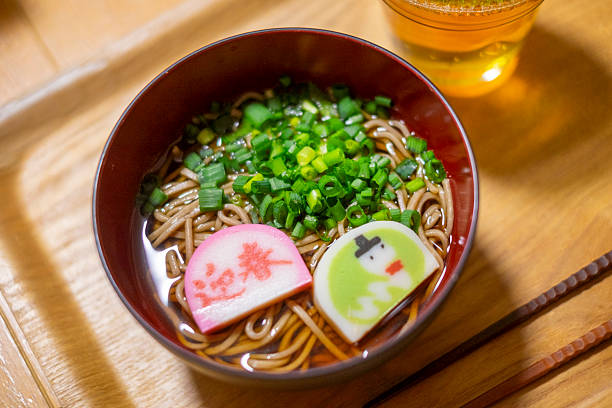
Toshikoshi Soba is a soba noodle dish topped with spring onions and optionally, fish cake or mochi. Toshikoshi literally translates to year crossing; eating these long soba noodles will bring a long life.
Experience Hatsumode in Kansai
If you’re planning on spending your holiday in Japan during New Year’s, Oshogatsu is an unforgettable cultural experience. Here are a couple of spectacular shrines for hatsumode.
Sumiyoshi Taisha, Osaka
Sumiyoshi Taisha is the head Sumiyoshi shrine nationwide and is located in southern Osaka. Over 200,000 people visit the shrine in the first three days to worship and pray for good luck in business, safe birth and protection from traffic collisions.
You can access Sumiyoshi Taisha on the Nankai Line and alight at Sumiyoshitaisha Station.
Kitano Tenmangu, Kyoto
Kitano Tenmangu is the head of 12,000 Tenmangu and Tenjinsha shrines across Japan and is located in northwest Kyoto. Enshrined here is Sugawara no Michizane, the God of learning and cultural entertainment.
You can access the shrine by bus, but during New Year’s the buses can become busy and it may be better to stay nearby or splash out on a taxi.
New Year’s Countdowns in Kansai
If you want to spend your New Year’s Eve counting down and visiting shrines in the coming days, here are some popular countdown events in Kansai.
Kobe Countdown Festival 2026
The Kobe Illuminage Countdown Festival occurs annually. You can enjoy a DJ show, live stage performances, a drone show, and more! This year’s theme is Garden Dream, with the venue transforming into a huge dream garden.
The show is easily accessible from Kobe Sannomiya Station; be sure to book your tickets in advance!
USJ Countdown
Why not combine your Universal Studios Japan visit with the New Year? Every year, USJ hosts their No Limit! Countdown event. Enjoy a countdown fireworks show, stage performances and twenty-six hours of attractions!
If you want an exciting start to 2027, USJ is no doubt the best place in Kansai to be!
FAQs: Oshogatsu New Year celebrations in Kansai
Oshogatsu is the Japanese New Year, taking place from the 1st to 3rd of January.
The two most common dishes are osechi ryouri and toshikoshi soba. Osechi ryouri is prepared before the New Year in tiered boxes and eaten during the first three days of the new year. Toshikoshi soba is a soba noodle dish; the noodles represent living a long life.
Hatsumode is the first shrine visit of the year. Over the first three days of the year, people pray at a shrine.
Kitano Tenmangu in Kyoto offers the perfectly traditional OShogatsu experience, or you could visit Sumiyoshi Taisha in Osaka.
You can do hatsumode at a local shrine or, if you’re in Kansai, the Kobe Illuminations or USJ No Limit are amazing New Year’s countdown events.