
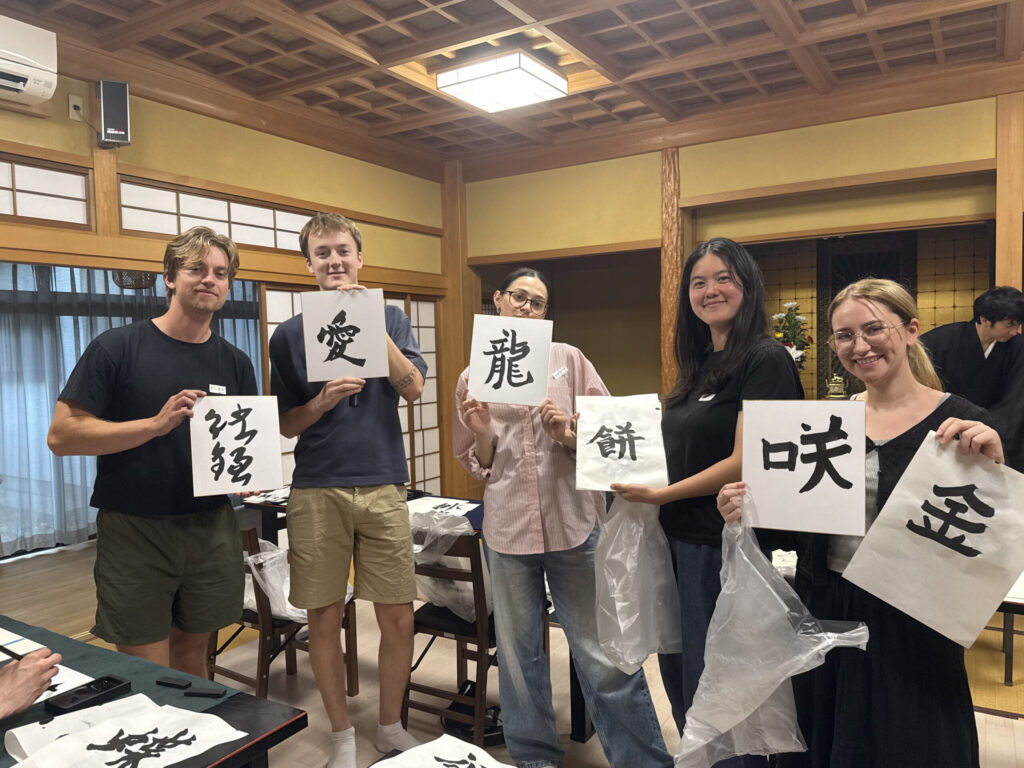
It was a rare but delightful opportunity to be given the chance to learn Japanese Calligraphy at Kōzenji Temple from a master calligrapher.
Travelling around Japan has provided me with many opportunities to experience aspects of the country’s culture that I had previously only read about or seen in documentaries. However, some experiences feel particularly special because they offer a glimpse into traditions that have been preserved and passed down through generations. Attending a Japanese calligraphy class at Kōzenji Temple was one of those experiences.
We were very fortunate to have this opportunity, which was meticulously organised by staff member, Andra, at Osaka English House. Alongside seven fellow volunteers from OEH, I was invited to participate in a calligraphy workshop led by a master calligrapher. We knew it would be an interesting cultural experience, but none of us quite anticipated how immersive and calming the day would be.
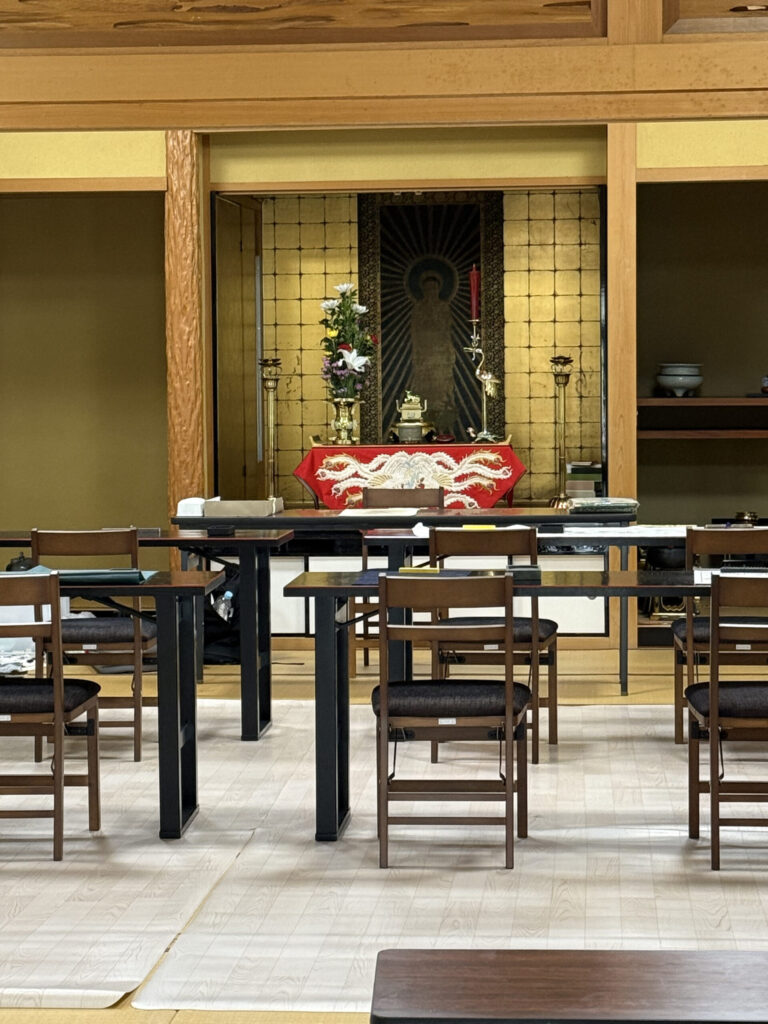
From the moment we arrived at Kōzenji Temple in Hirakata, there was a sense of tranquillity in the air. Surrounded by beautifully maintained gardens, carefully shaped trees, and peaceful temple grounds, it almost felt like another world far removed from the busy streets of modern day Osaka. As we were welcomed into the temple, we were told about some of its history. During the age of the samurai, the area looked different from how it does today. Water once surrounded the temple, rather than the roads that surround it today, though the temple itself remains much unchanged due to the great care given to its preservation. In fact, they showed us the four original wooden pillars which have stood since the temple’s creation.
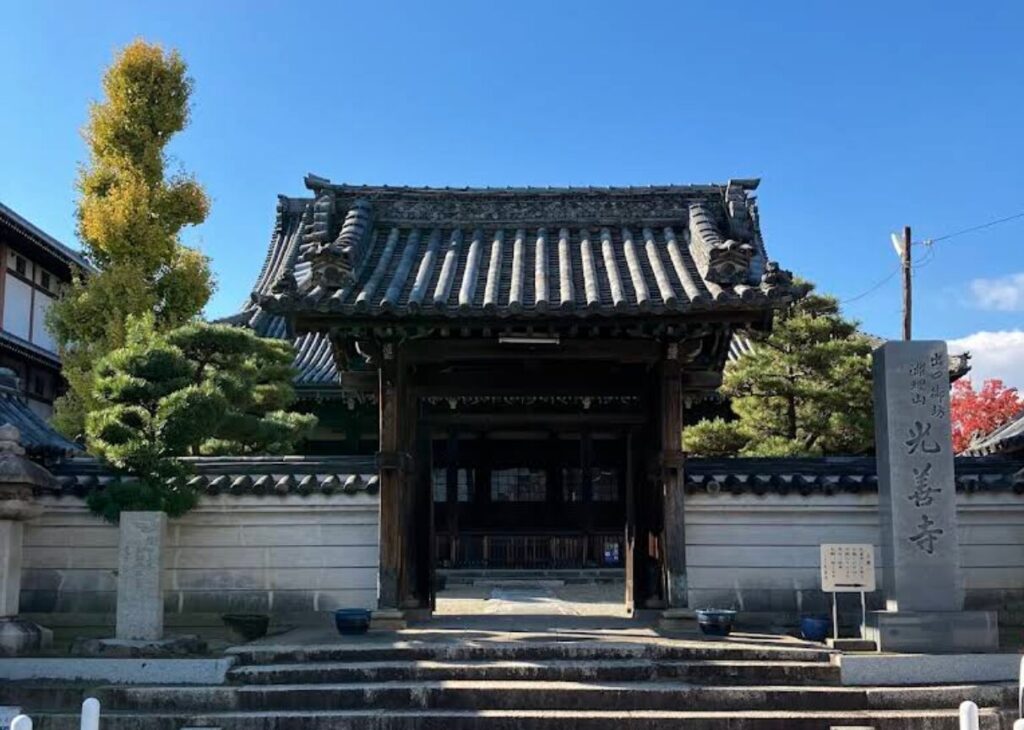
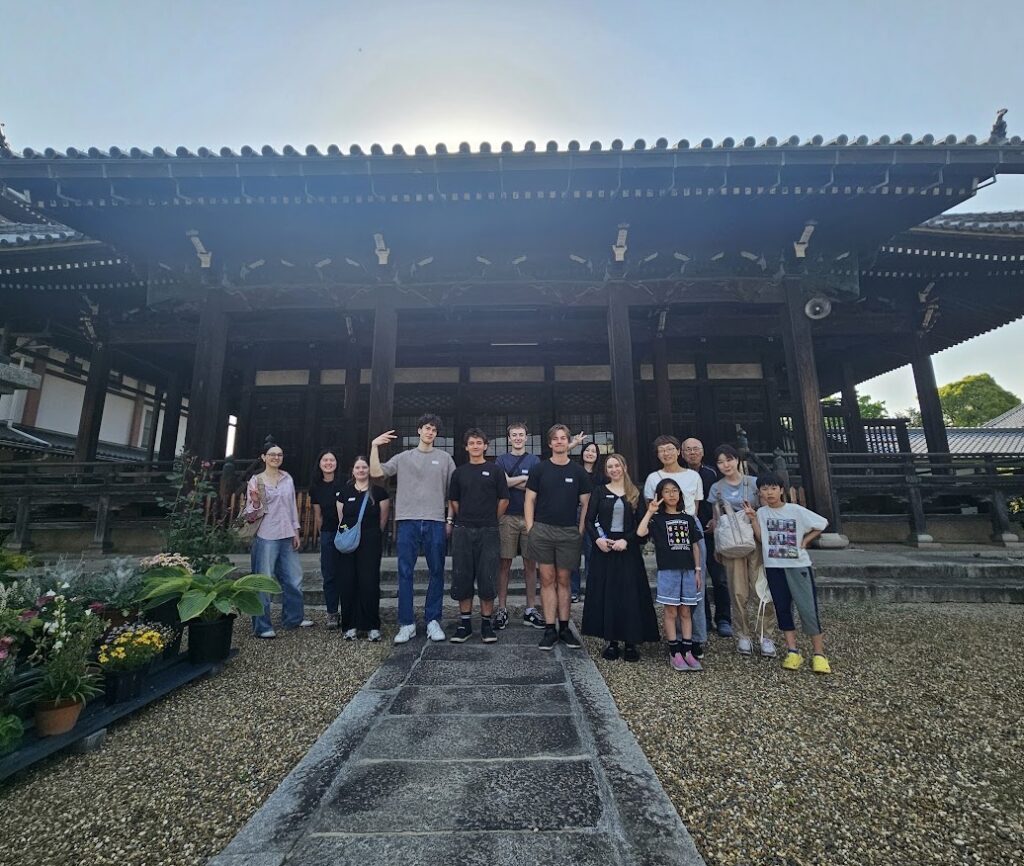
All of this is to say that Kōzenji Temple provided the perfect setting for learning an art form so deeply connected to mindfulness and discipline. Throughout the introduction, there was a strong emphasis on the importance of being present in the moment, a philosophy that lies at the heart of Japanese calligraphy. We were encouraged to leave distractions behind, focus on our breathing, and give our full attention to each movement of the brush.
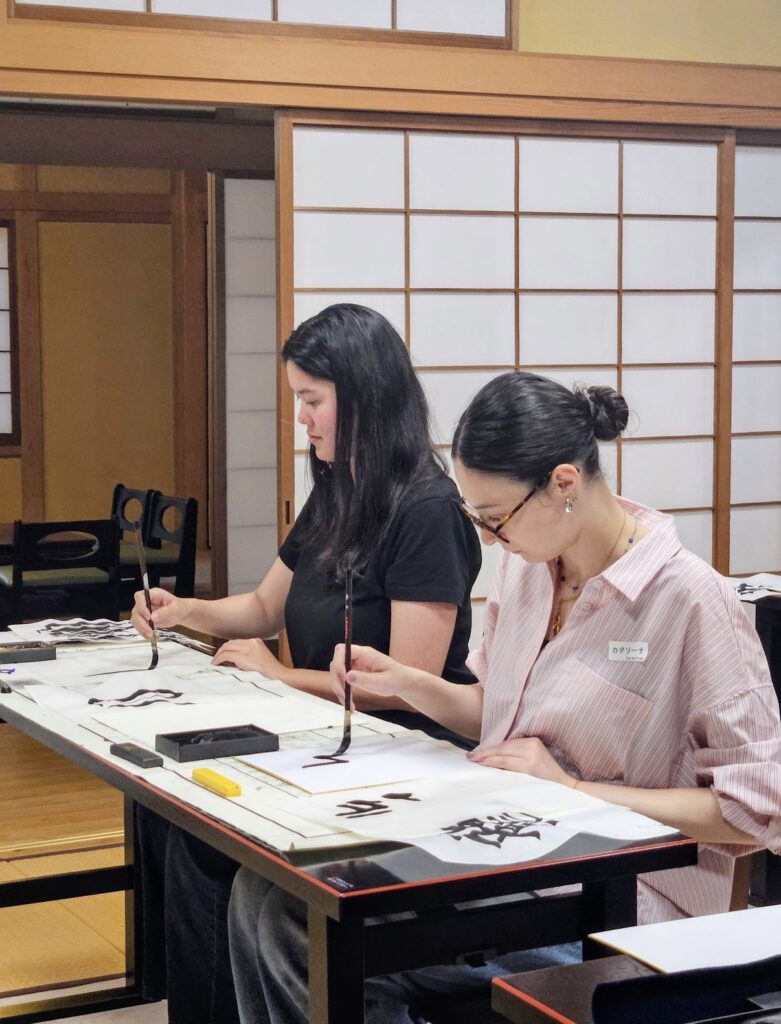
The master along with the temple priest (Jushoku 住職), had clearly taken great care to prepare the space for us, and they put us completely at ease despite our being complete beginners. Each workstation had been carefully arranged with the traditional tools we would need to begin our introduction to shodō: sheets of practice paper, ink stones, and calligraphy brushes, traditionally crafted from bamboo and animal hair.
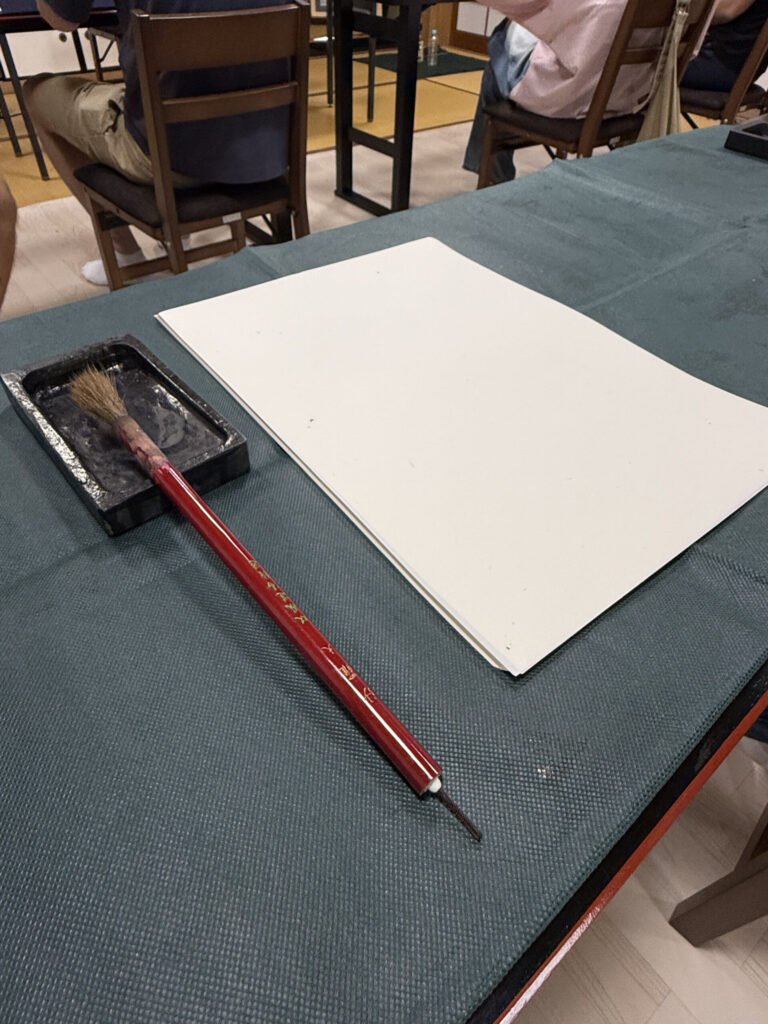
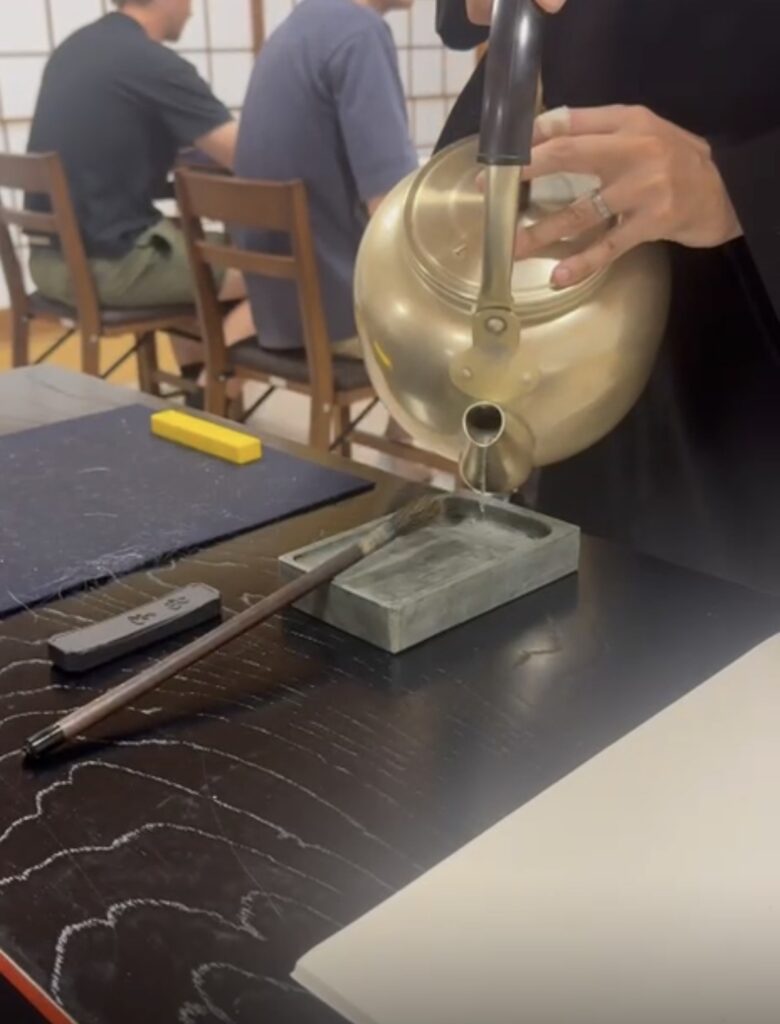
The calligrapher demonstrated how ink is traditionally prepared, showing us the process of grinding a solid ink stick against an ink stone while gradually adding water. He explained that this is not merely a preliminary step, but an essential part of the practice itself, where the time and attention it requires help to foster mindfulness. In this way, even the act of making the ink becomes an exercise in patience and intention, encouraging a sense of focus and grounding before the brush ever touches the paper. It reflects a broader emphasis throughout the art of calligraphy on slowing down and fully appreciating the present moment.
They began the session by introducing us to the history and philosophy behind Japanese calligraphy, known as shodō, which literally means “the way of writing.” Calligraphy is far more than simply writing characters on paper: it is both an art form and a discipline, combining technical skill, concentration, and self-expression.
Before we picked up our brushes, the master demonstrated the proper techniques, and watching him work was fascinating. The movements appeared effortless—though we quickly learned how difficult they are as beginners. He guided the brush across the paper, forming elegant characters that flowed naturally from one stroke to the next. Every action was deliberate and controlled, yet there was also a striking sense of fluidity in the way he worked, almost as if precision and ease existed at the same time.
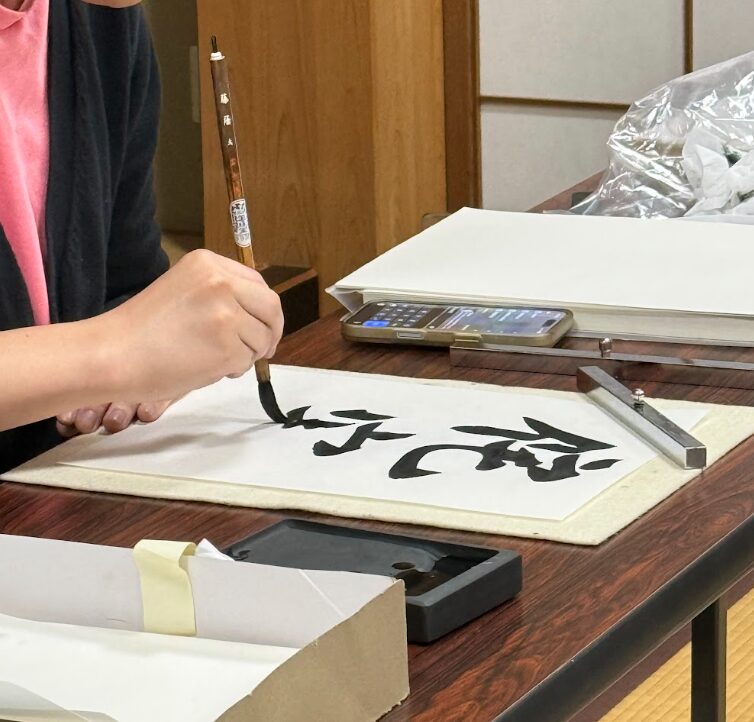
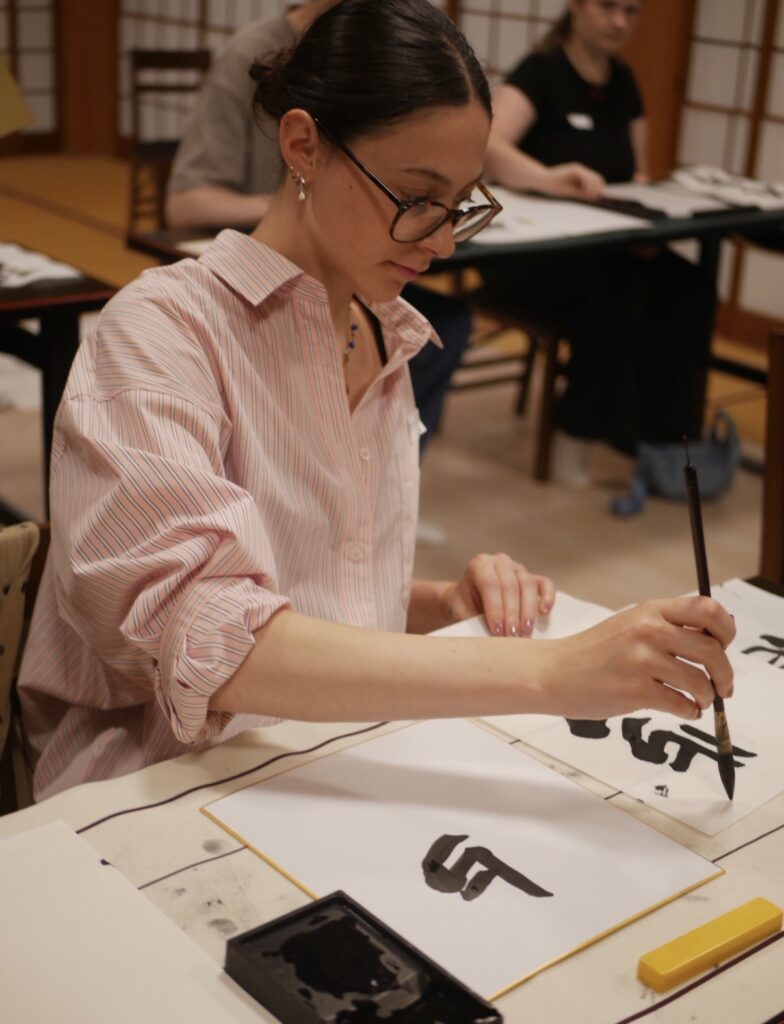
One of the most memorable parts of the demonstration was the emphasis placed on movement. Rather than focusing solely on the hand or fingers, the master explained that calligraphy engages the entire body. He showed us how posture influences each brushstroke, instructing us to sit a closed-fist distance from the table with our backs straight, and to let movement originate from the arm and shoulder rather than the wrist alone. He also demonstrated how to hold the brush gently between three fingers, with the palm curved as though cradling an invisible egg. This approach was entirely different from how most of us are accustomed to writing in everyday life. There was a strong connection between movement, breathing, and concentration without perfection.
Once the introduction was complete, it was our turn to try. Armed with our brushes and a mixture of excitement and nervousness, we began practising basic strokes on the paper. The first few attempts were humbling—what had looked graceful and effortless during the demonstration suddenly felt far more difficult in practice. Maintaining the correct posture, holding the brush properly, controlling pressure, and forming balanced strokes all required far more coordination than one might expect from simply watching someone else do it.
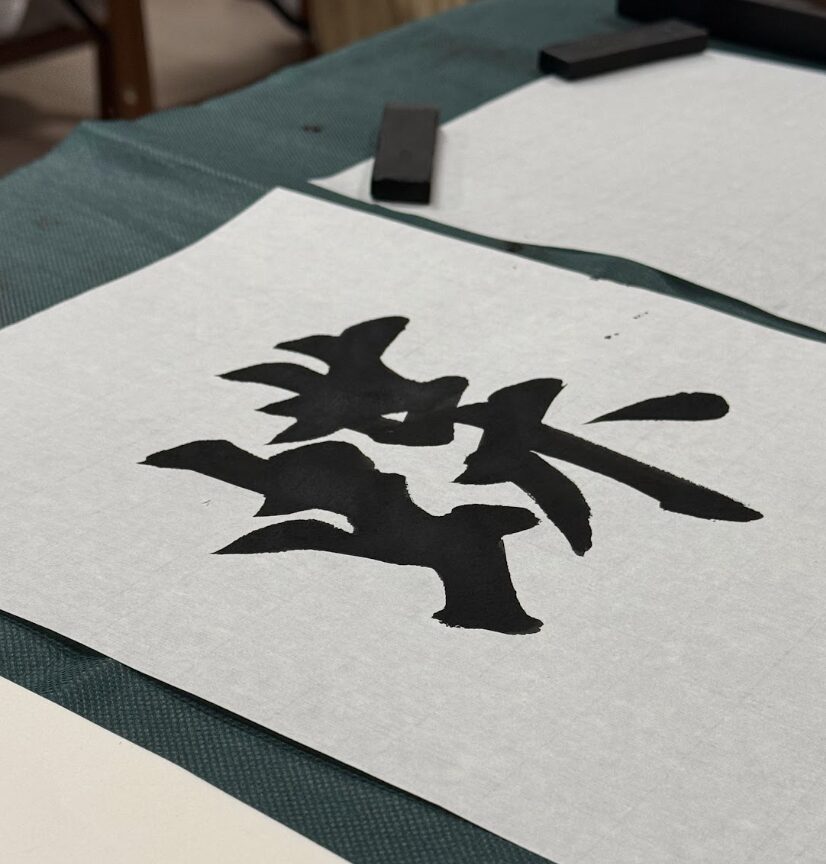
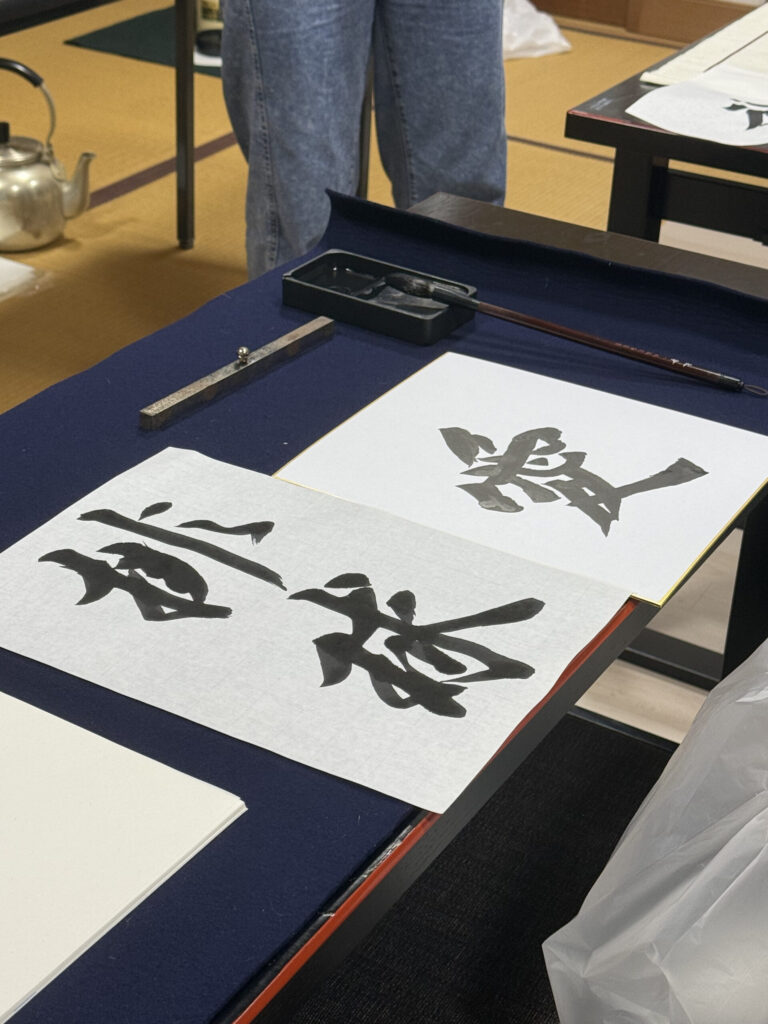
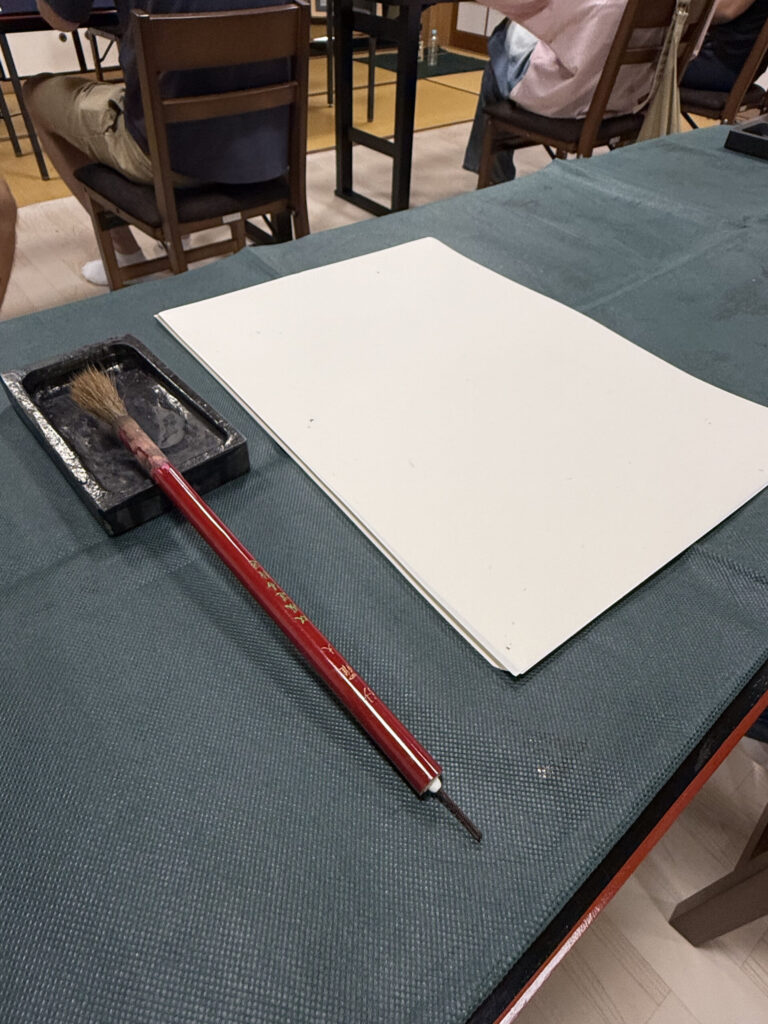
Yet despite the challenge, the atmosphere remained relaxed and encouraging. The master offered gentle advice about how to position the brush so that the edges of the ink would remain sharp. Rather than focusing on mistakes, he encouraged us to concentrate on the process itself. There was no pressure to produce perfect characters. Instead, the emphasis was on learning, observing, and improving. As the session continued, I found myself becoming increasingly absorbed in the activity. It was one of those rare experiences where time appears to pass more quickly because you are fully engaged in the present moment.
The pace was unhurried, the instruction patient, and the environment encouraged reflection and personal improvement rather than performance. In modern life, I often find myself surrounded by distractions, notifications, and constant demands for attention, but the calligraphy class felt like the opposite of that. It required us to slow down, focus on a single task, and accept that improvement and satisfaction come through practice and perseverance rather than instant results and gratification.
This emphasis on mindfulness may be one reason why traditional arts such as calligraphy continue to hold such importance in Japan. They provide not only a means of artistic expression but also an opportunity to cultivate patience, discipline, and awareness.
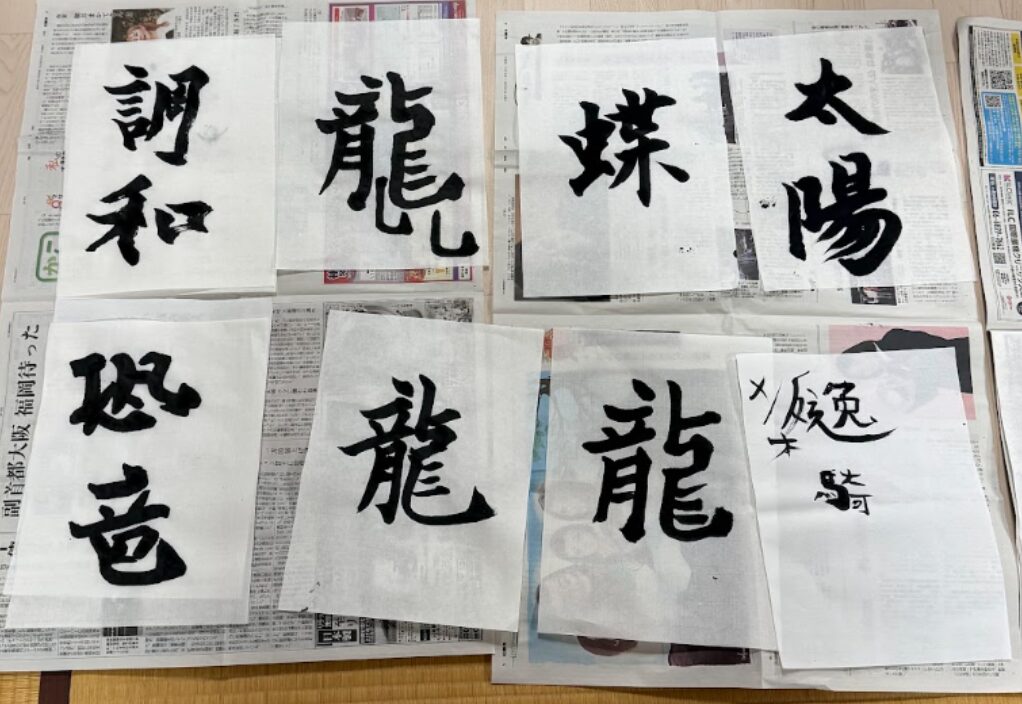
After we had spent some time practising calligraphy, the hosts invited us to take part in a traditional tea ceremony. We were served tea and mochi, and then led to another hall where we could enjoy views of the temple’s carefully maintained gardens through the window. As guests, we were encouraged to appreciate not only the tea itself, but also the atmosphere created by the ritual. The experience highlighted the Japanese concept that beauty can be found in simplicity, attentiveness, and shared moments.
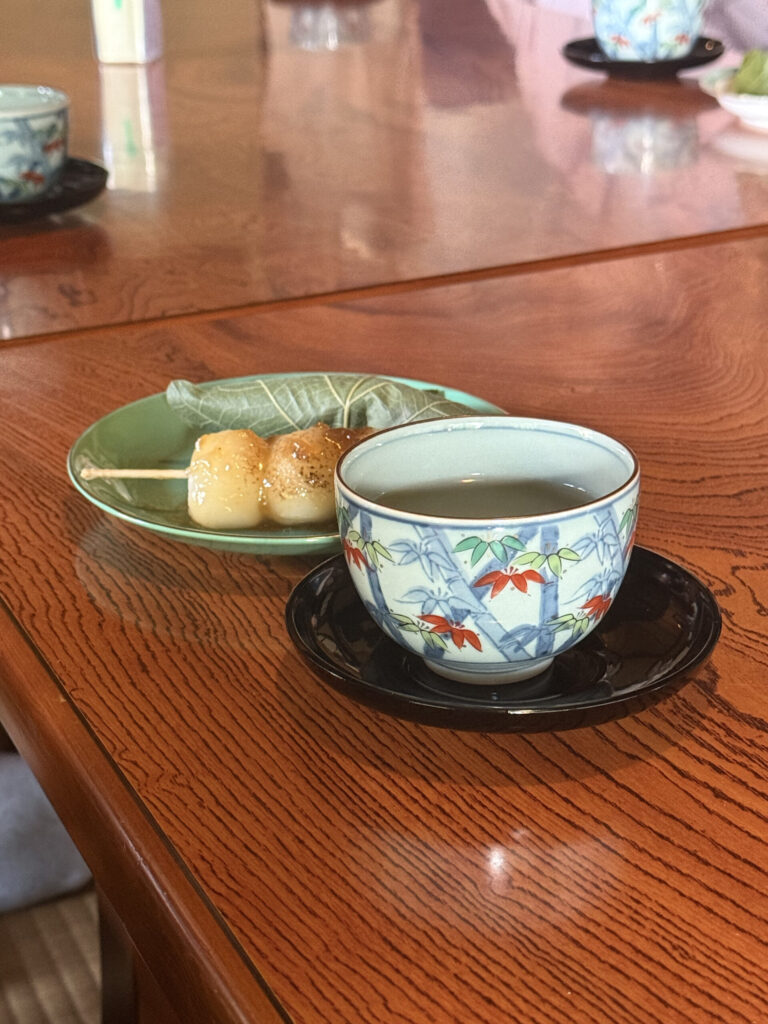
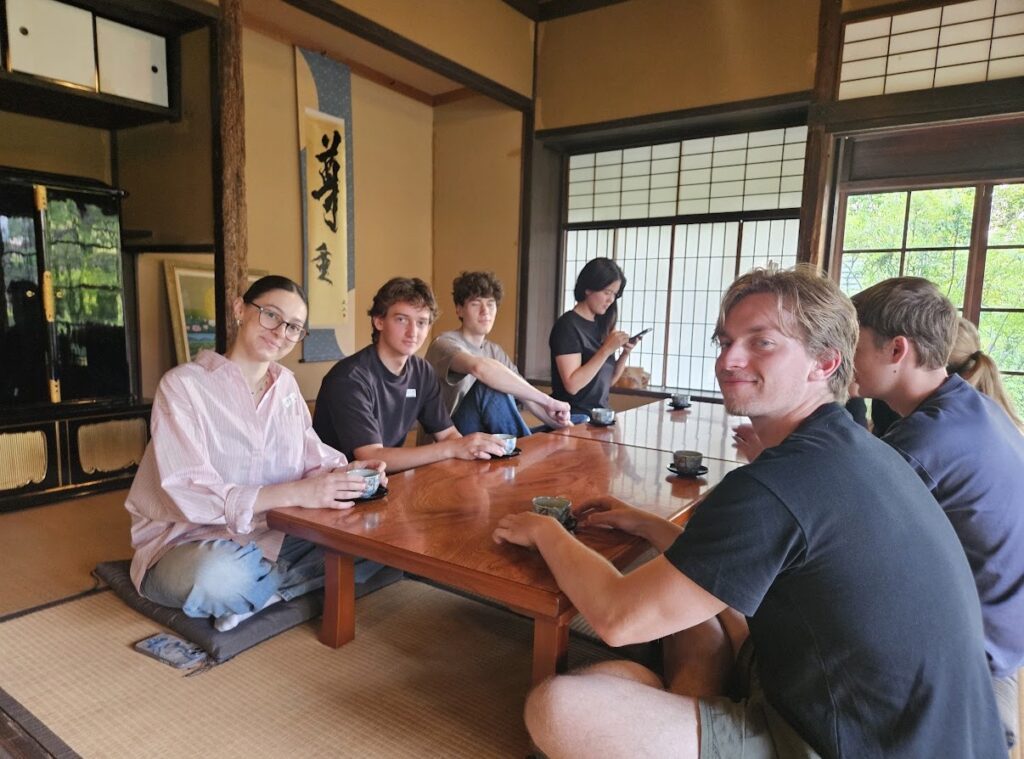
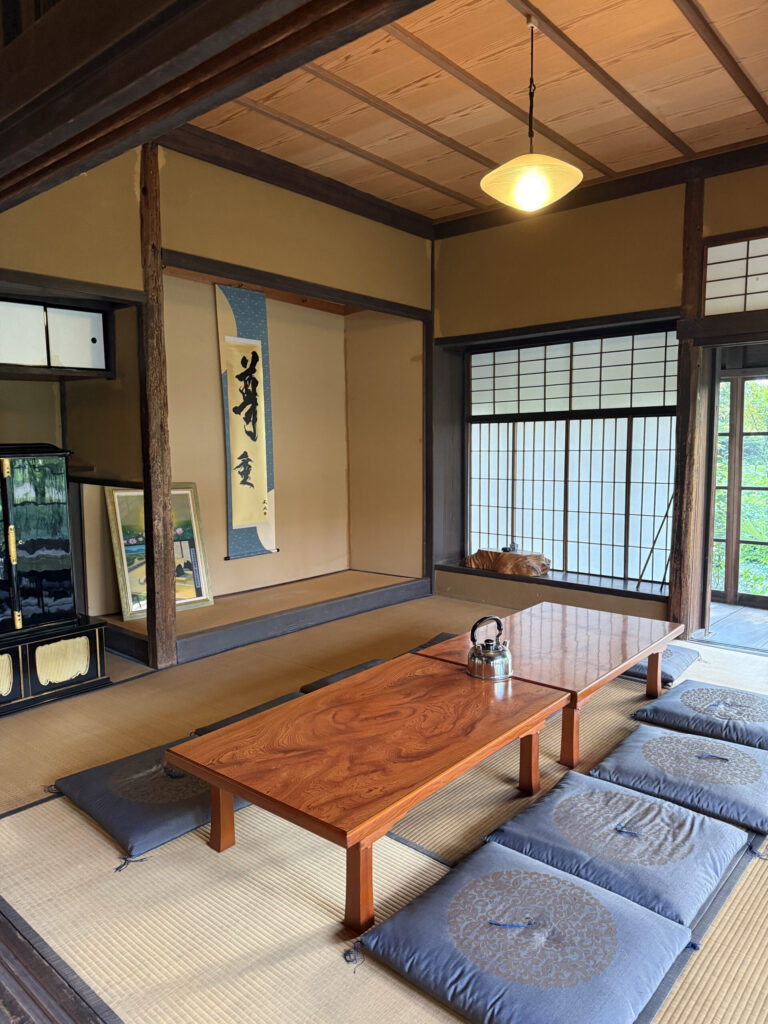
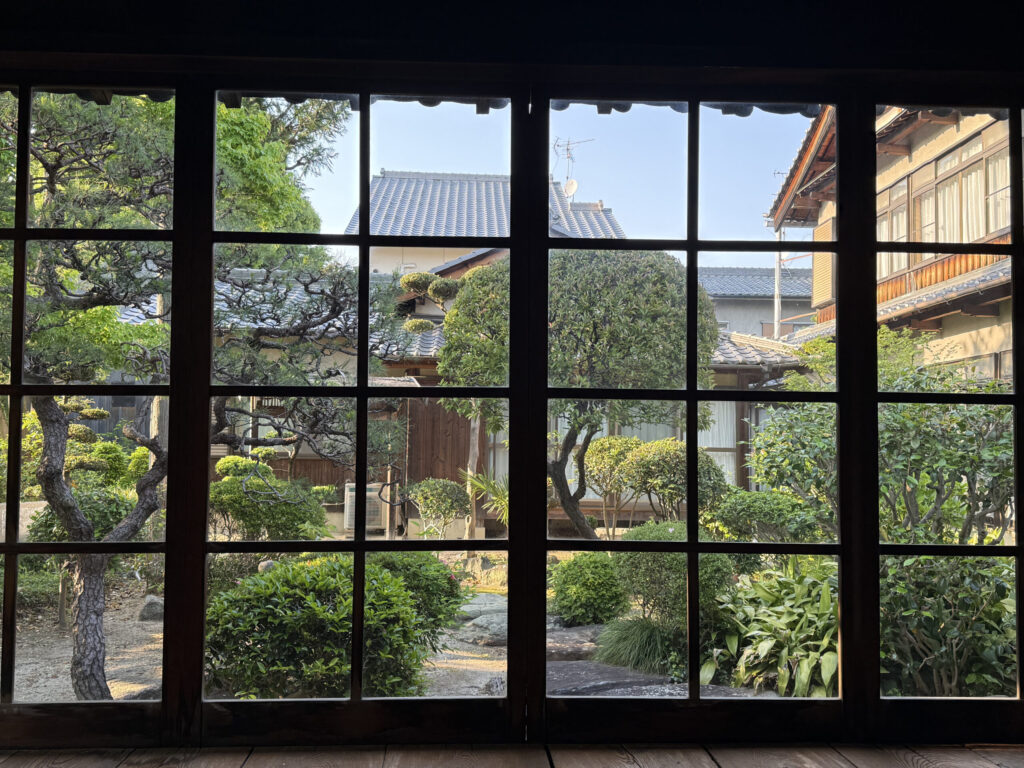
After the tea ceremony, it was time to return for the final piece we would take home. We were each given a canvas and asked to focus on creating a final, finished character. Beforehand, each of us had chosen a word that held personal meaning, which the calligrapher then translated into Japanese characters and provided us with a reference sheet to guide our work. I chose the word “sun,” and with that in mind, I concentrated carefully as I attempted to form the final strokes, turning everything we had learned throughout the session into a single, intentional piece.
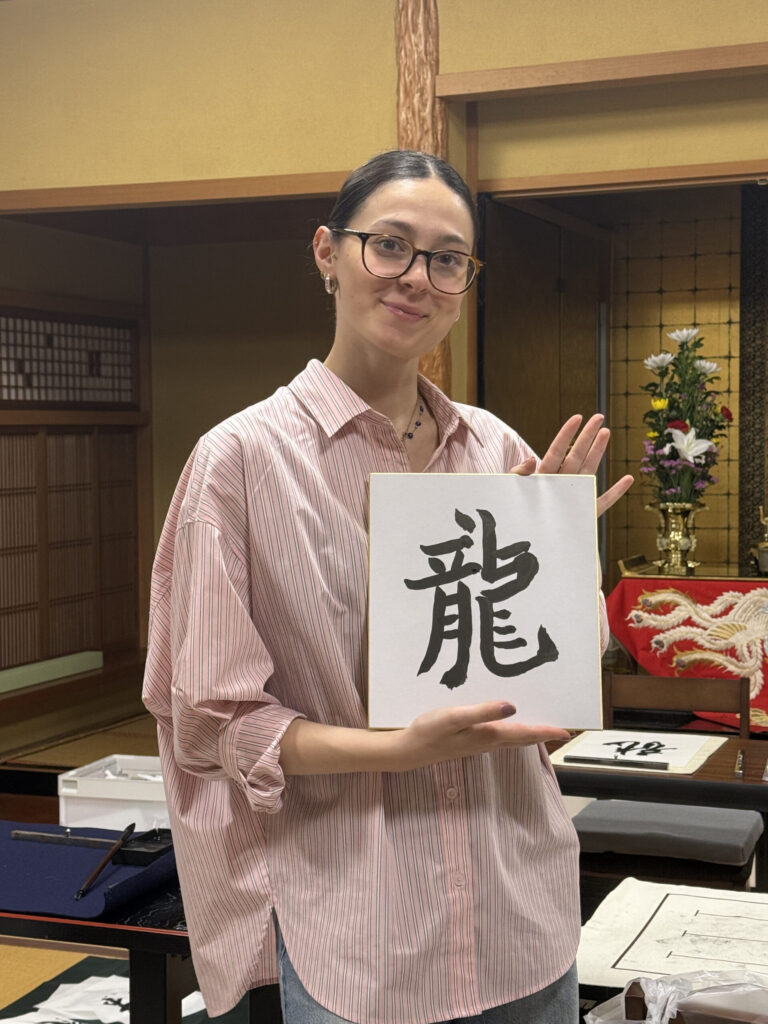
Experiences like this are one of the greatest rewards of travelling in Japan. They offer the chance not just to observe culture, but to take part in it directly. The workshop at Kōzenji Temple reminded me that meaningful lessons come not from rushing towards a goal, but from appreciating the journey itself.
Written by Ellie 🤍
F.A.Qs about Calligraphy Experience at the Kozenji Temple in Hirakata
Kōzenji Temple offers an immersive, beginner-friendly experience that combines traditional calligraphy (shodō) lessons with a peaceful tea ceremony. Located away from the busiest city streets, this historic temple provides a tranquil, authentic setting for cultural immersion.
The workshop is led by a master calligrapher alongside the temple priest, ensuring a deeply authentic and educational session. Visitors get to experience the entire traditional process, from grinding raw sumi ink on an ink stone to learning how full-body posture and breathing influence every single brushstroke.
Not at all. The class is specifically designed to put complete beginners at ease. Rather than pressuring participants to create perfect characters, the instruction focuses on the meditative journey of learning, observing, and connecting with the rhythm of the brush.
The session includes an introduction to the history and Zen philosophy of shodō, step-by-step technique demonstrations, and hands-on practice time. Afterward, guests participate in a traditional tea ceremony with matcha and mochi overlooking the temple gardens, and finally create a customized kanji word on canvas to take home as a personal keepsake.