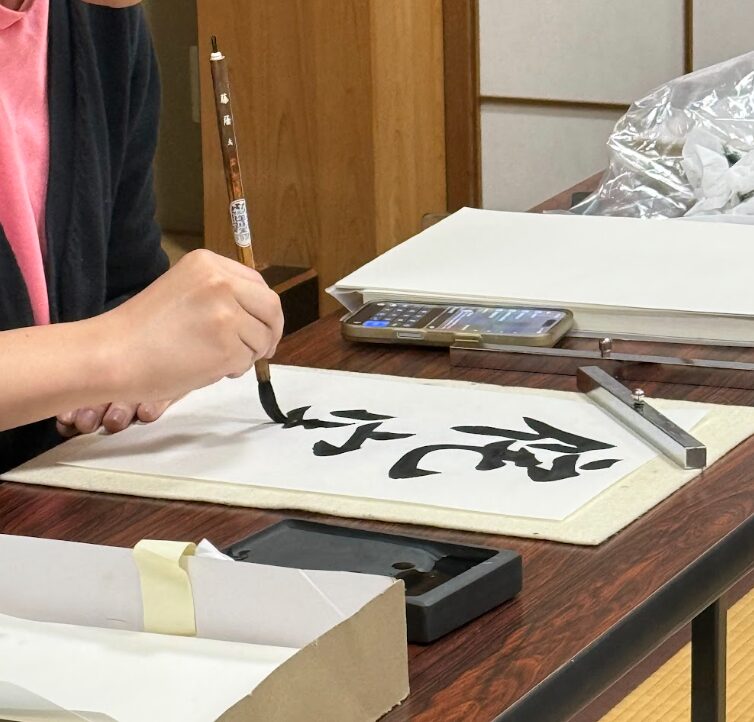
Japanese calligraphy, known as shodō (書道), literally means “the way of writing.” Yet anyone who has watched a skilled calligrapher move brush across paper knows it is far more than handwriting. It is painting, meditation, discipline, and self-expression combined into a single flowing gesture. Every stroke reflects not only technical skill, but also the state of mind of the artist at that exact moment.
For centuries, Japanese calligraphy has been woven into the country’s cultural identity. From Zen temples and imperial courts to modern classrooms and design studios, the art continues to shape how beauty, balance, and simplicity are understood in Japan today.
Although Japanese calligraphy originated centuries ago, it continues to thrive in modern society across a wide range of settings. Today, shodō is most commonly practiced in schools, cultural institutions, temples, and artistic communities throughout Japan.
The Origins of Japanese Calligraphy
Japanese calligraphy traces its roots back to China. Around the 5th century, Chinese characters, or kanji, were introduced to Japan along with Buddhism, literature, and administrative systems. Early Japanese scholars studied Chinese writing styles carefully, imitating the elegant scripts used by Chinese masters.
However, calligraphy arrived in Japan not merely as a practical writing system, but as part of a spiritual tradition. Buddhist monks copied sacred sutras by hand as an act of devotion and meditation. The slow, deliberate movement of the brush required patience, concentration, and inner stillness. Writing became a spiritual discipline as much as a visual art.
This meditative foundation deepened with the spread of Zen Buddhism. Zen teachings emphasized mindfulness, simplicity, and complete awareness of the present moment — principles naturally reflected in calligraphy. Before touching brush to paper, practitioners learned to calm the mind, regulate breathing, and focus entirely on the movement of the brush. A single distracted thought could alter the balance of a stroke.
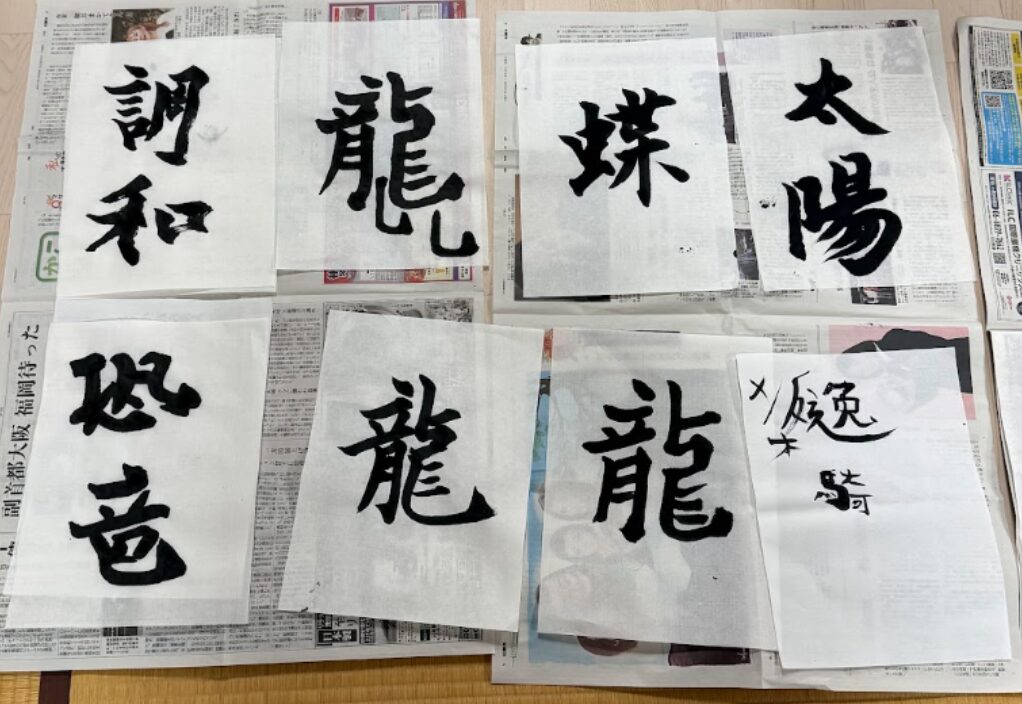
Because ink cannot easily be erased, calligraphy teaches acceptance and presence. Every line is permanent, capturing the emotional state of the artist in that exact instant. In Zen philosophy, the brush became an extension of the self. Confidence, anxiety, calmness, or hesitation could all appear visibly in the ink.
Over time, Japan developed its own distinctive approach to this art. While Chinese calligraphy often emphasized structure and power, Japanese styles gradually became softer, more fluid, and more emotional. The development of the hiragana and katakana writing systems during the Heian period (794–1185) allowed Japanese artists to create uniquely Japanese forms of expression.
Court nobles during the Heian era used calligraphy not only for official documents but also for poetry and personal correspondence. A beautifully written poem could be considered just as important as the words themselves. Ink color, paper texture, spacing, and brush movement all carried emotional meaning. This connection between writing and feeling remains central to shodō today.
The Philosophy Behind the Brush
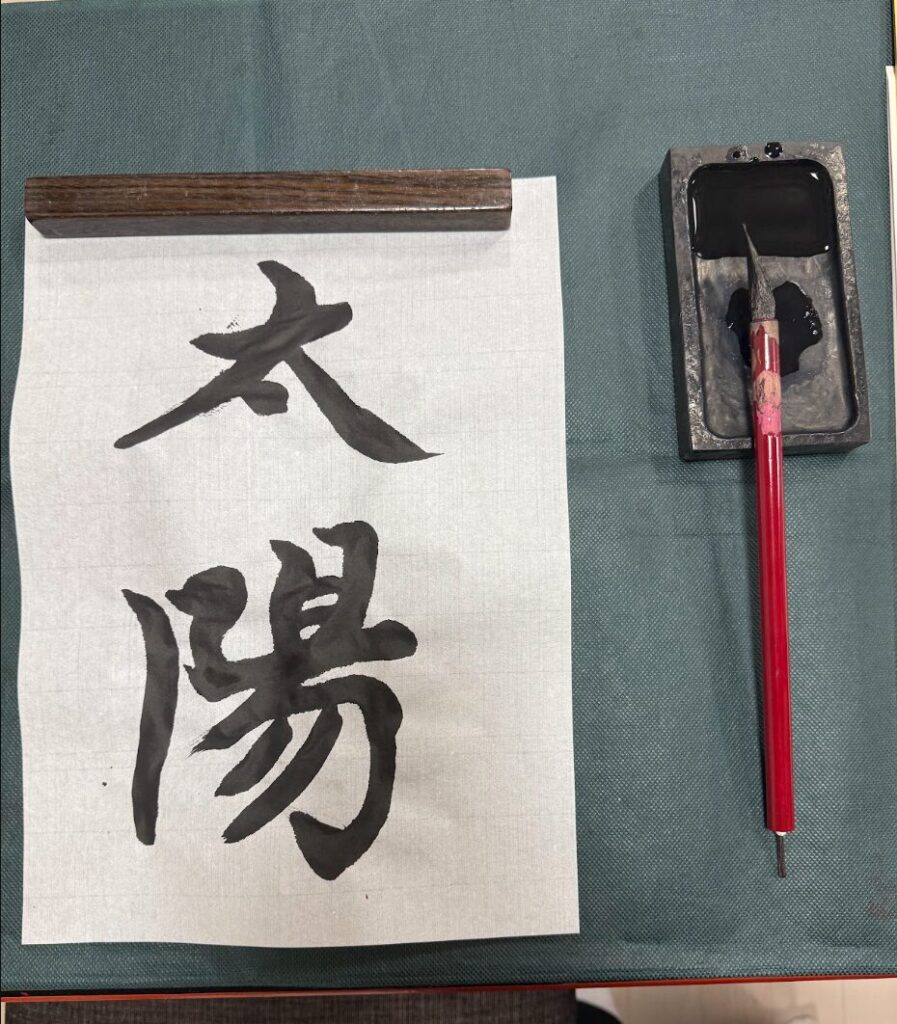
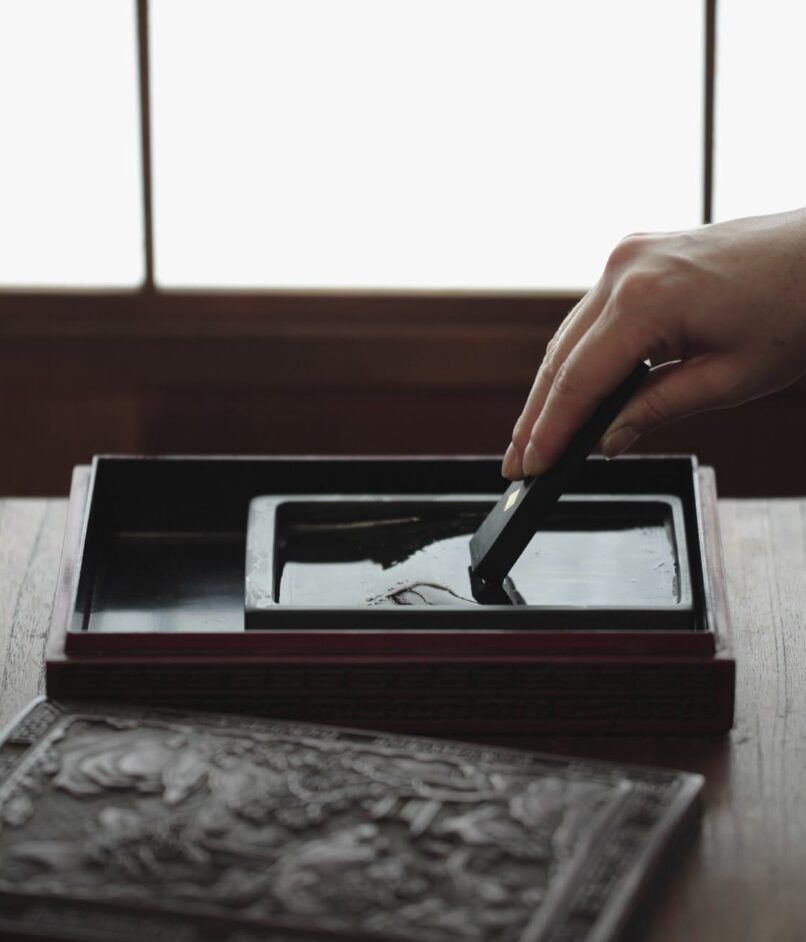
Unlike ordinary writing, Japanese calligraphy is deeply connected to philosophy and mindfulness. Many practitioners describe it as a meditative experience. Even now, the preparation process itself encourages stillness. Artists slowly grind solid ink sticks against an ink stone with water, creating liquid ink through careful, repetitive movement. This ritual helps quiet the mind before writing begins.
In Zen Buddhism, calligraphy is often viewed as a reflection of the inner self. Hesitation, anxiety, confidence, or peace can all appear in a single line of ink. Because brush strokes cannot easily be corrected, calligraphy encourages acceptance rather than perfection.
This idea gives shodō its emotional weight. Two artists may write the exact same character, yet the results can feel entirely different. One may appear bold and energetic, while another seems gentle and restrained. The brush becomes an extension of personality and spirit.
There is also an appreciation for imperfection. Slight irregularities or unexpected variations are often valued because they reveal authenticity and humanity. In this way, Japanese calligraphy shares similarities with other Japanese aesthetics such as wabi-sabi, the beauty found in impermanence and imperfection.
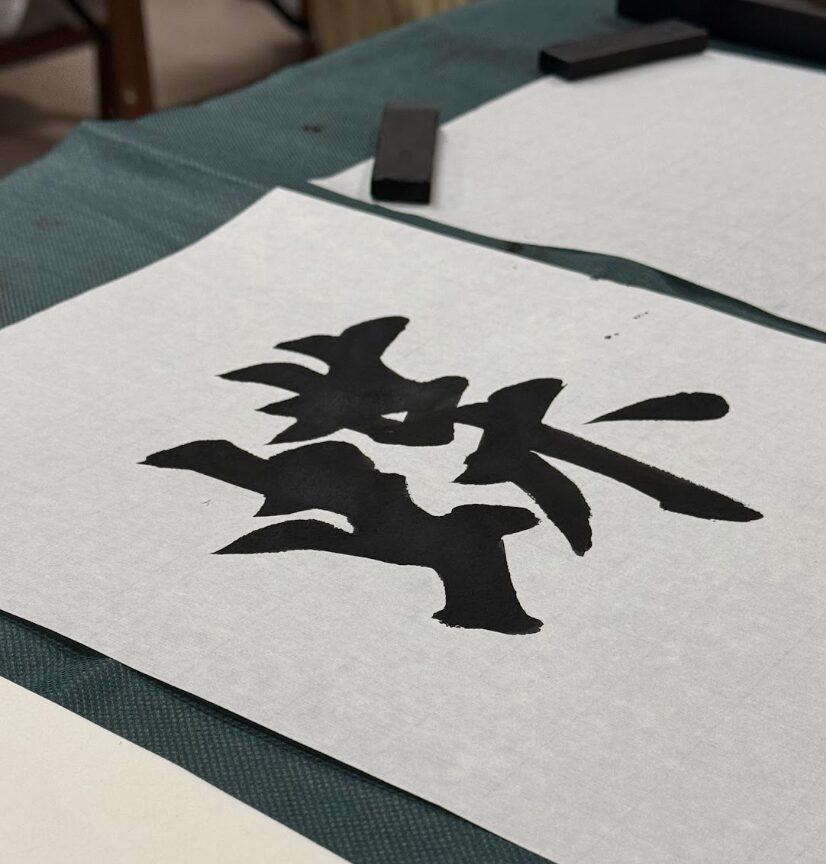
The Essential Tools of Shodō
Traditional Japanese calligraphy relies on four basic tools, sometimes referred to as the “Four Treasures.”
Brush (Fude)
The brush is perhaps the most important tool. Brushes come in different sizes and are made from animal hair such as goat, horse, or weasel. Softer brushes create flowing lines, while firmer brushes produce sharper strokes.
A skilled calligrapher learns to control pressure, speed, and angle with remarkable precision.
Ink (Sumi)
Traditional ink is made from soot mixed with glue and formed into solid sticks. The artist grinds the ink stick against a stone with water to create liquid ink. This slow preparation process is considered part of the meditative practice itself.
Paper (Washi)
Japanese calligraphy paper, or washi, is handmade and highly absorbent. The texture of the paper influences how the ink spreads and dries, giving each work a unique character.
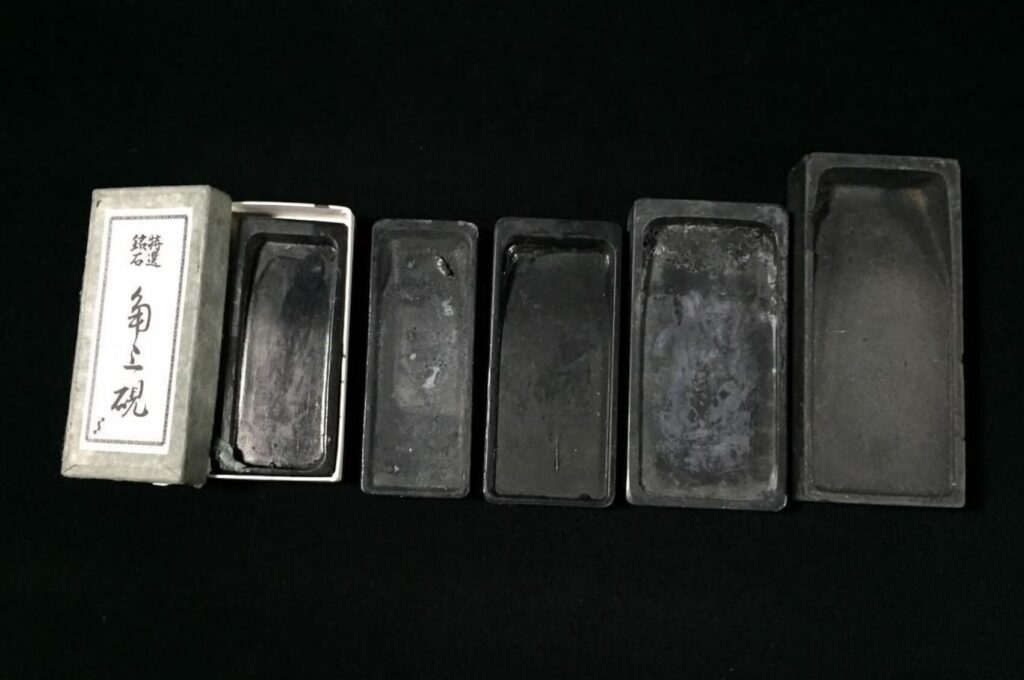
Ink Stone (Suzuri)
The ink stone is used for grinding the ink stick with water. Though simple in appearance, many ink stones are finely crafted works of art themselves.
Calligraphy in Everyday Japanese Life
Although modern technology has reduced the need for brush writing, calligraphy still plays an important role in Japanese culture. Children across Japan practice calligraphy in school, especially during the New Year season. Students often participate in kakizome, the “first writing” of the year, where they write auspicious words or goals for the months ahead.
Calligraphy also appears in traditional arts such as tea ceremony, martial arts, and flower arrangement. Hanging scrolls with seasonal phrases or Zen sayings are commonly displayed in tea rooms and temples.
For example, Meiji Shrine, one of Japan’s most iconic cultural landmarks and a major tourist attraction, showcases beautifully executed calligraphy on its decorative sake barrels (kazaridaru), demonstrating how deeply the art remains woven into Japanese culture and tradition. The shrine also plays an important role in preserving this heritage through its annual Shoten Exhibition, a calligraphy competition that showcases the work of elementary and junior high school students from across Japan.
Why the art of calligraphy survives, and why you should consider trying it yourself:
Japanese calligraphy is far more than decorative writing. It is a centuries-old art form that combines language, philosophy, movement, and emotion into a single expressive act. Rooted in Buddhist meditation and Zen mindfulness, shodō teaches that beauty comes not from perfection, but from presence — from the harmony between mind, body, and brush.
Japanese calligraphy continues to captivate people around the world. Each brushstroke captures a fleeting moment of thought and emotion, making every piece deeply personal and impossible to fully replicate.
For beginners, this is precisely what makes shodō worth trying. Unlike many art forms that focus only on the final result, Japanese calligraphy values the experience itself: the steady breathing, the careful preparation of ink, and the concentration required for every movement. It encourages patience in a fast-paced world and offers a rare opportunity to slow down and focus completely on the present moment.
You do not need to speak Japanese or master complex characters to appreciate the practice. Even simple strokes can become meaningful exercises in mindfulness and self-expression. In a society increasingly shaped by screens and constant distraction, shodō offers a chance to reconnect with creativity, stillness, and the human touch behind every mark.
FAQs about The Living Art of Japanese Calligraphy
Shodō (書道) translates to “the way of writing.” It is the traditional Japanese art of calligraphy that goes far beyond basic handwriting, beautifully combining language, painting, meditation, and physical discipline into a single expressive movement.
The Four Treasures refer to the essential tools required for traditional shodō. These include the brush (fude), which is made from animal hair and varies in flexibility, and the ink (sumi), a solid stick made of soot and glue. The setup is completed by the paper (washi), a highly absorbent handmade sheet, and the ink stone (suzuri), which is used to grind the ink stick with water.
Shodō is deeply tied to Zen philosophy and the practice of being fully present in the moment. Because traditional sumi ink cannot be erased, rewritten, or corrected, every single brushstroke permanently captures the artist’s exact emotional state. The entire process requires steady breathing, deep focus, and an appreciation for natural imperfections, making it a powerful form of active meditation.
Not at all. Shodō values the personal journey and the mindfulness of the writing process over flawless technical perfection. You do not need to understand complex kanji characters or speak fluent Japanese to appreciate the art form. For beginners, even tracing or drawing simple lines can serve as a deeply calming exercise in self-expression.
Calligraphy remains a vibrant part of modern Japanese culture rather than just a historic relic. Children practice it in schools across the country, particularly during kakizome, which is the traditional first writing of the New Year. You can also spot beautifully brushed characters on hanging scrolls in tea rooms, inside martial arts dojos, and on the iconic decorative sake barrels displayed at major cultural landmarks like Tokyo’s Meiji Shrine.