What is the festival and why is there a devil
Setsubun is held each year in February, either on the 2nd, 3rd, or 4th of the month, depending on the lunar calendar, and celebrated for multiple days. The celebration is held to ward off evil spirits at the beginning of spring. So the celebration is, in a way, a cleanse towards the rest of the year.
In the earlier years when these traditions were formed, sardine fish heads were burned to emit a strong scent to drive away the Oni (demons or ogres). Today, traditions have changed, but some still protect their homes with fish heads.
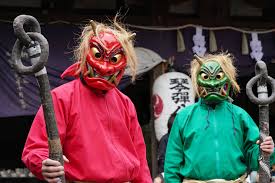
Now, Sunburn is celebrated mainly with roasted beans called “fukumame”, “fortune beans”. Throwing fukumame toward the front door of your house or towards someone dressed up as an Oni (yes thats why people wear the demon masks) while yelling “Oni wa soto! Fuku wa uchi!” “Demons out! Fortune in!”. Afterwards, you slam the door in the face of the Oni and eat some roasted soybeans (don’t confuse them for the beans you threw on the floor). Eat one bean for every year according to your age, plus one more for the future year. This tradition brings in luck after pushing away the bad luck with the bad spirits.
Many people visit temples or shrines for the Setsubun festival, where traditions vary by temple. Often, the celebration involves throwing soybeans, sweets, or money into the crowd, and performances about revoking the Oni. Some shrines also host performances by apprentice geisha or sumo wrestlers, depending on the area and the shrine’s size.
There are other traditions during the festival that vary by region. For example, here in the Kansai area, there is a tradition of eating sushi rolls, which sounds like a tradition I’m very happy to partake in. The rolls are eaten in silence without speaking (which is the difficult part for us yappers) while facing the direction of the lucky compass (determined by the zodiac animals of each year).
Where and how to celebrate
Many temples and shrines in the Kansai area celebrate Setsubun. Here are 5 of the most famous celebrations in Osaka and Kyoto, with highlights ranging from dance performances to fire shows to free sushi rolls.
Osaka
Osaka Naritasan Fudoson
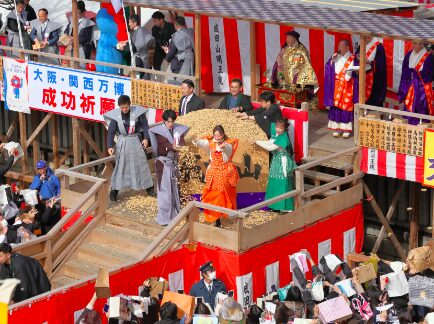
In Osaka, the Naritasan Fudoson Setsubun celebration is one of the most popular destinations. A 150-meter-long stage is set up within the temple grounds, where ceremonies based on ancient tsuina rituals are performed and beans are thrown during the famous bean-throwing ceremony. Unlike most Setsubun events, only “Fuku wa uchi” (“good fortune in”) is shouted, reflecting the belief that Fudō Myōō’s compassion can reform even demons. The temple is also only 4km away from OEH!
You can find the schedule here:
https://osaka-naritasan.or.jp/event/%e7%af%80%e5%88%86%e7%a5%ad
The Google Maps link:
https://maps.app.goo.gl/eJ14gjmLcw6uDXL66
Osaka Tenmangu Shrine
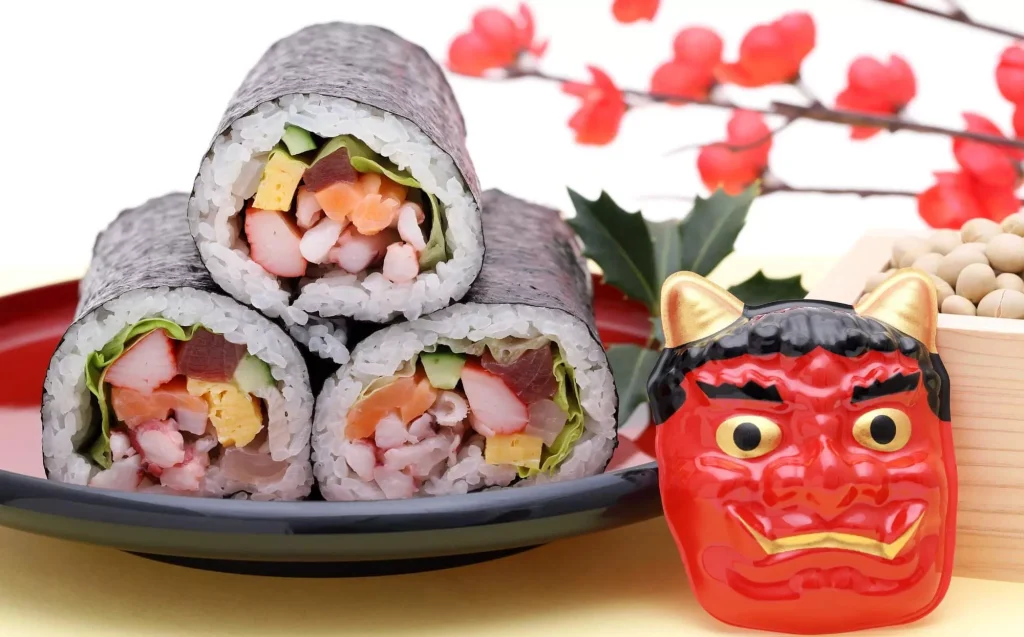
Osaka Tenmangū Shrine stands out for turning Setsubun into a large-scale, uniquely Osakan celebration featuring ehōmaki, the lucky-direction sushi rolls. The shrine hosts the famous “1,000 People Sushi Roll Eating,” where participants simultaneously bite into ehōmaki while facing the year’s lucky direction.
FREE sushi rolls are given out to the first 1,000 participants, so make sure to be there on time to get yours! I mean, who could say no to free sushi rolls? Tenmangū Shrine might be the place to experience the most Osakan Setsubun, since the sushi roll tradition is only in the Kansai area.
The shrine also has a tradition of hosting small demon-wrestling shows. Here is a YouTube vlog by a vlogger who shows what the demon wrestling is like at the shrine and how the celebration unfolds:
You can find the schedule here:
https://osakatemmangu.or.jp/saijireki
The Google Maps link:
https://maps.app.goo.gl/UPWxzS7swvbZDue77
Kyoto
Yoshida Shrine
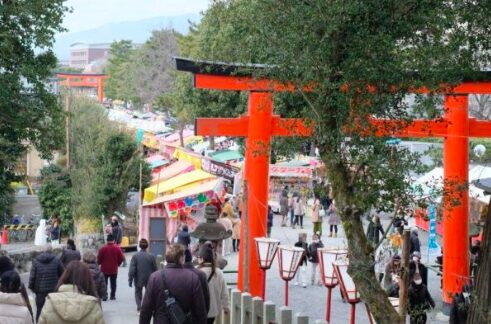
Yoshida Shrine is one of the biggest and most famous places in Japan to experience Setsubun. Each year, around 500,000 people visit the shrine, filling the grounds with excitement, food stalls, and traditional performances from fire performances to bean throwing, and everything in between.
The celebrations are like a festival, with hundreds of vendors lining the area and events taking place throughout the day and into the night for multiple days. If you’re looking for a lively, large-scale Setsubun experience with the vibes of a summer festival (in the winter and with demons), then this is the shrine for you.
You can find the schedule here:
https://www.yoshidajinja.com/setubunsai.htm
The Google Maps link:
https://maps.app.goo.gl/p5jmQeH8MVxmu1Vy7
Yasaka shrine
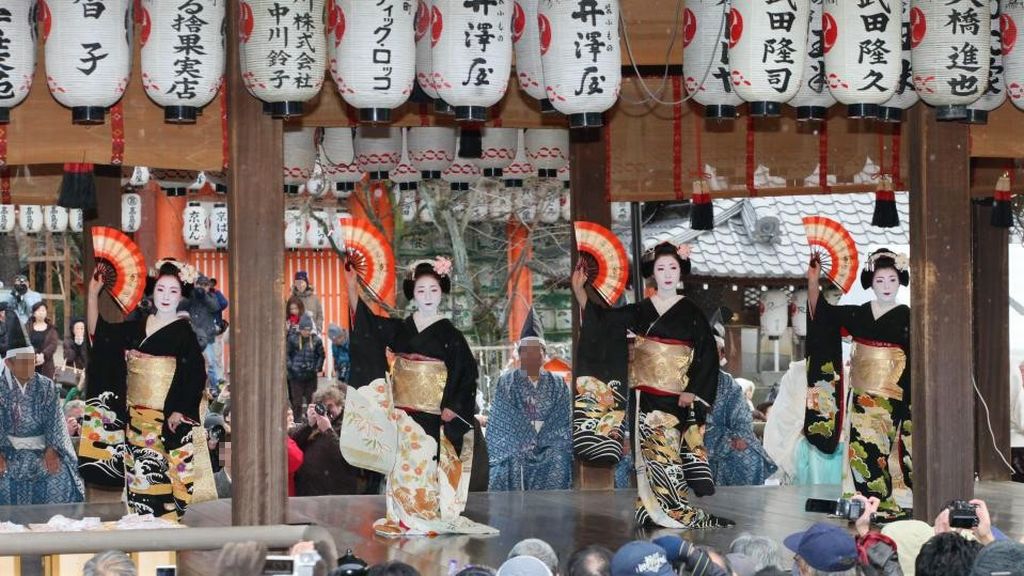
Yasaka Shrine offers a traditional take on Setsubun, combining classic rituals with Kyoto’s refined cultural heritage. With the usual bean-throwing ceremonies and prayers, the shrine is famous for its maiko and geisha dance performances. These graceful dances attract large crowds from all over, and make Setsubun at Yasaka one of the most popular places to visit in Kyoto.
The shrine publishes a detailed schedule on its official website each year (linked below) that lists all performance and ceremony times, making it easy to plan your visit around the dances you’d like to see.
You can find the schedule here:
https://www.yasaka-jinja.or.jp/event/setsubun/
The Google Maps link:
https://maps.app.goo.gl/Er1LDeruFPza76RN7
Heian-Jingū Shrine
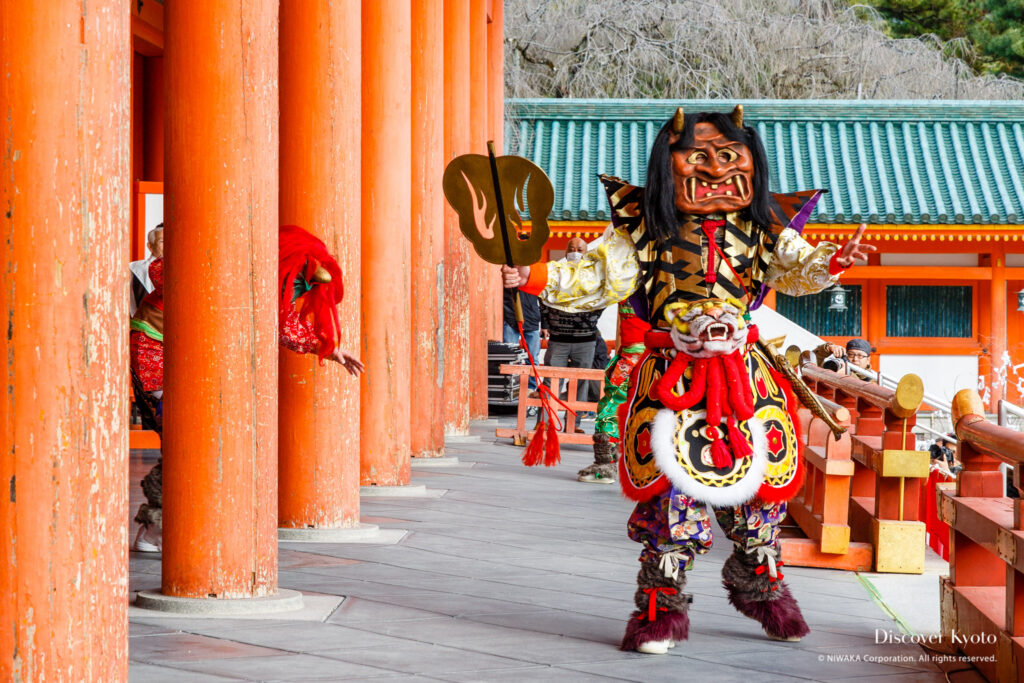
Heian-jingū Shrine hosts one of Kyoto’s most dramatic Setsubun celebrations, known for its powerful fire rituals and fun performances.
After prayers, the festival features a performance of driving the oni (demons) out of the shrine grounds, while the oni scare the crowds. The show has flames, ritual movements, and costumed warriors, creating an almost theatrical atmosphere. A popular cleansing fire show is also held at the shrine after the performances.
Discover Kyoto has a cool YouTube video showing all the festivities at the Heian-jingū Shrine that you can check out here:
The Google Maps link:
https://maps.app.goo.gl/cSMym1KjLPKkdCma8
You can find the schedule here:
https://www.discoverkyoto.com/event-calendar/february/setsubun-sai-heian-jingu
FAQs: Setsubun Festival
The Setsubun festival is a traditional Japanese event held in early February to mark the beginning of spring. It focuses on driving away bad luck and welcoming good fortune through rituals like bean throwing, shrine visits, and seasonal foods.
Beans are thrown to symbolically chase away evil spirits called oni. People shout “Oni wa soto! Fuku wa uchi!” meaning “Demons out! Fortune in!” before eating roasted soybeans for luck and health in the coming year.
Setsubun is celebrated between February 2 and 4, depending on the lunar calendar. Major shrines in Kansai often host multi-day events with performances, food stalls, and large-scale bean-throwing ceremonies.
Popular Setsubun festival locations in Kansai include Yoshida Shrine and Yasaka Shrine in Kyoto, as well as Osaka Tenmangū and Naritasan Fudōson in Osaka. Each offers different rituals, performances, and local traditions.
Typical Setsubun foods include roasted soybeans (fukumame) and ehōmaki sushi rolls. In Kansai, ehōmaki is eaten silently while facing the year’s lucky direction to invite good fortune.