Sutra copying, known in Japan as shakyō (写経), is a Buddhist practice that combines devotion, meditation, and artistry into a single act. Introduced alongside Buddhism in the 6th century, shakyō became one of the most meaningful ways for both monks and ordinary people to engage with Buddhist teachings. At its simplest, it involves carefully copying sacred texts by hand, most commonly the Heart Sutra. You can read a more detailed history here.
So, What is Sutra Copying?
Historically, sutra copying was believed to bring spiritual merit. Emperor Shōmu famously commissioned handwritten sutras for temples across Japan in the 8th century, linking Buddhism closely with politics and national identity.
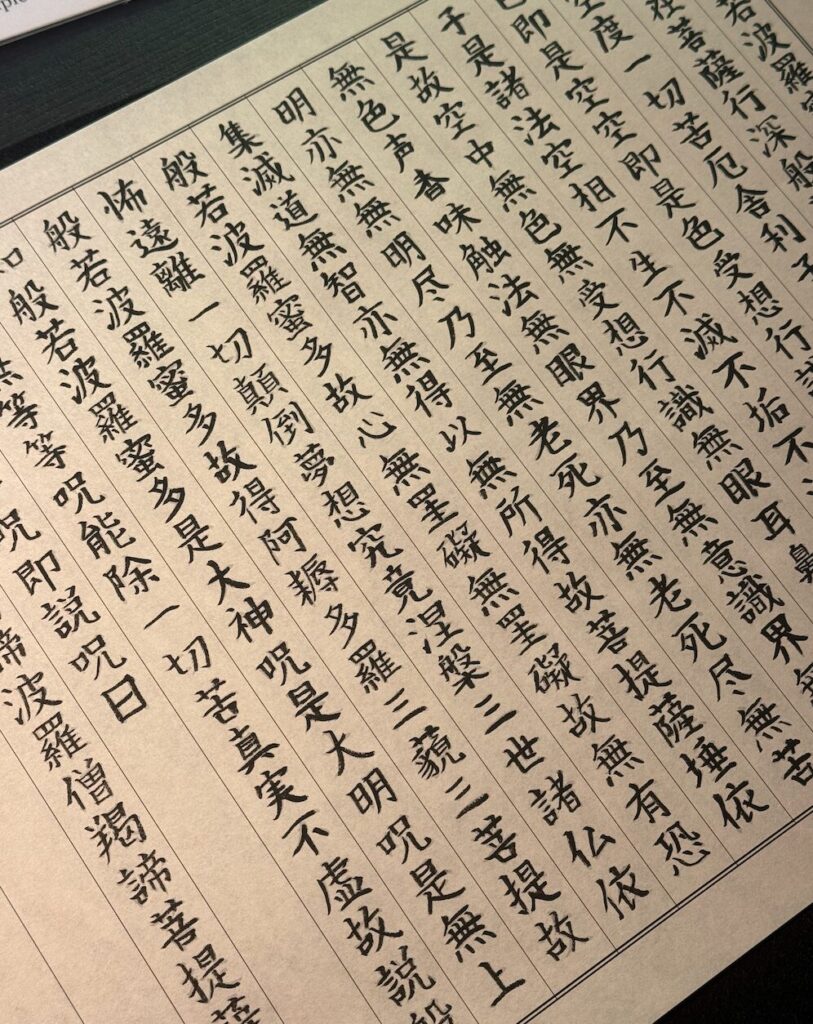
On a personal level, shakyō is deeply meditative. Practitioners sit quietly, usually with brush and ink, tracing characters with slow, deliberate movements. The process encourages concentration and calm, much like chanting or seated meditation. Even people who cannot fully understand the classical Chinese used in many sutras still find meaning in the act itself. The repetition of writing creates a strong sense of mindfulness and focus.
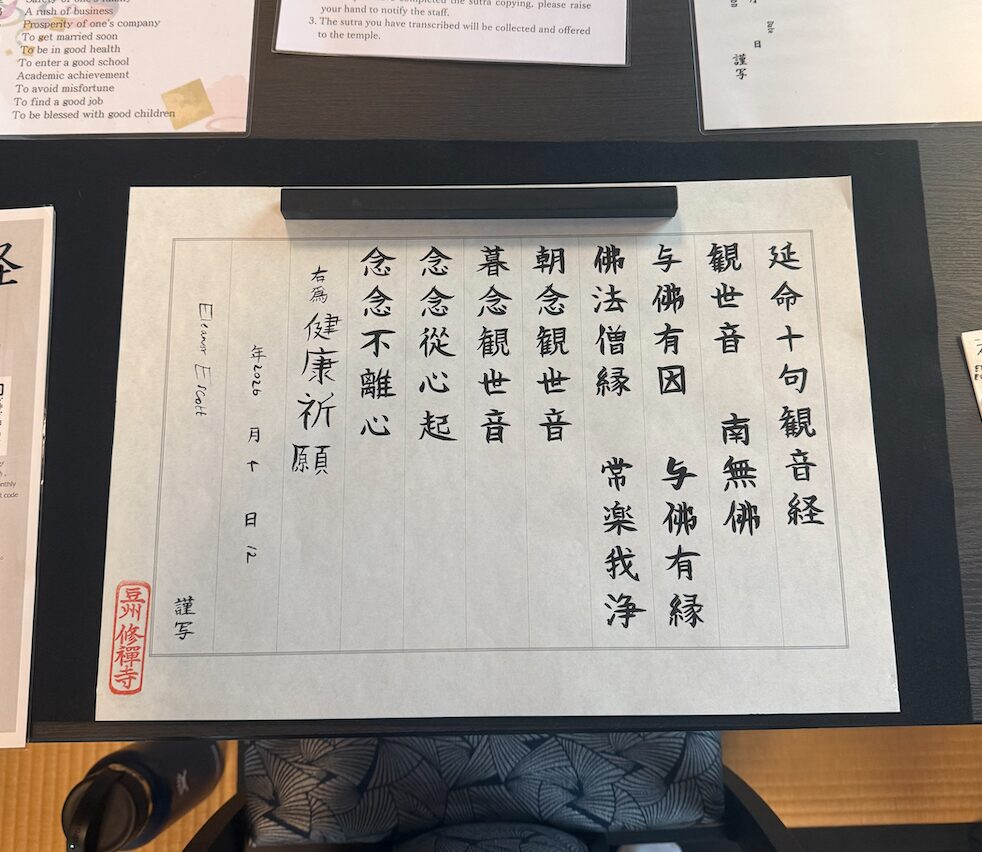
Intention is also central to the practice. Before beginning, many people dedicate their sutra copying to a purpose such as gratitude, healing, remembrance, or personal growth. The finished sutra may be offered to a temple, placed on a home altar, or kept as a personal keepsake.
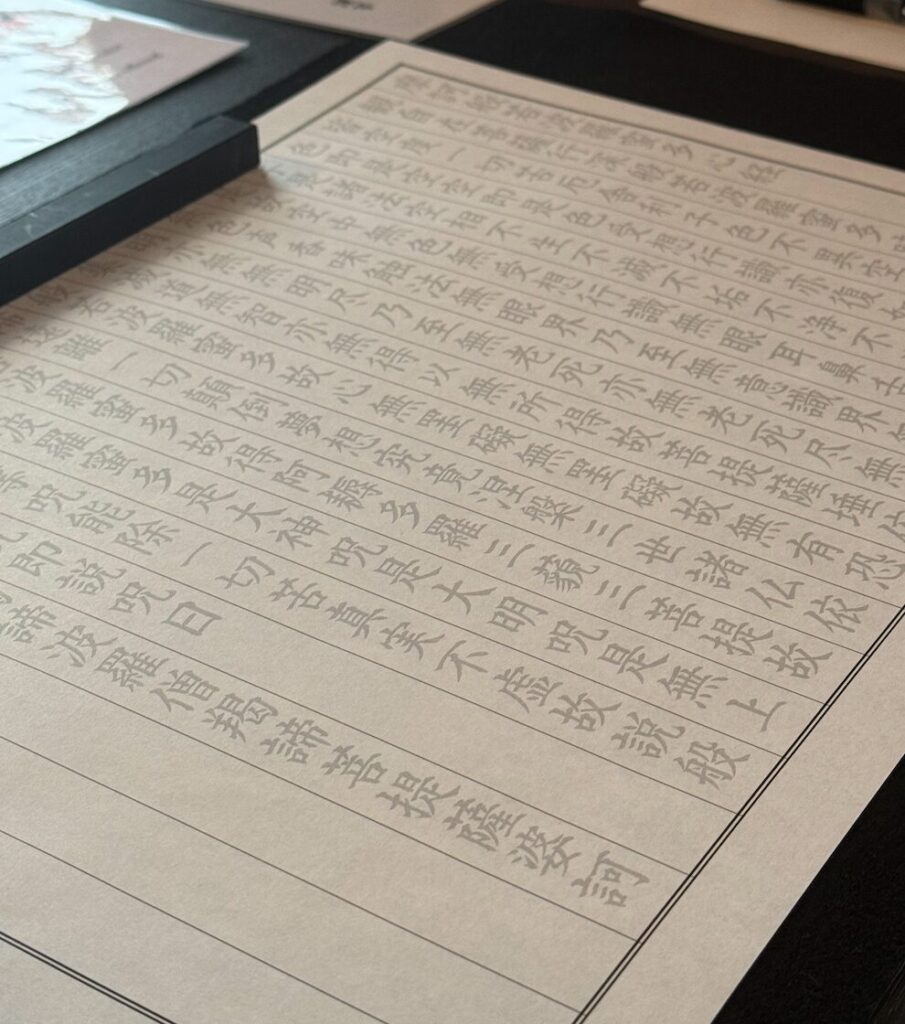
Today, shakyō remains widely practiced throughout Japan, especially at temples that welcome visitors and beginners. Many sessions provide tracing sheets and materials, making the practice accessible even to those with no calligraphy experience. In modern life, shakyō has also become popular as a way to relieve stress and disconnect from the constant pace of technology and travel.
Below are two temples, one in Kyoto and one in Osaka, that offer sutra-copying experiences in a welcoming and accessible way, particularly for beginners and international visitors who may be trying the practice for the first time.
Sutra Copying at Shōrin-ji Temple (Kyoto)
One of the best places to experience shakyō in Kyoto is Shōrin-ji Temple, located near the famous Tofuku-ji area. Shōrin-ji Temple is a true hidden gem in a city full of tourist attractions. While larger temples in Kyoto can feel crowded and overwhelming, Shōrin-ji offers something quieter: a calm, deeply personal introduction to Japanese Buddhist practice. It is dedicated to Bishamonten, a Buddhist guardian deity associated with protection and good fortune.
For beginners interested in sutra copying (shakyō), this is one of the most welcoming places in Kyoto. The temple explicitly welcomes first-time visitors and foreigners, and reservations can even be made for solo travelers. Materials are provided, including tracing sheets, brushes, and ink, so you do not need any calligraphy experience beforehand.
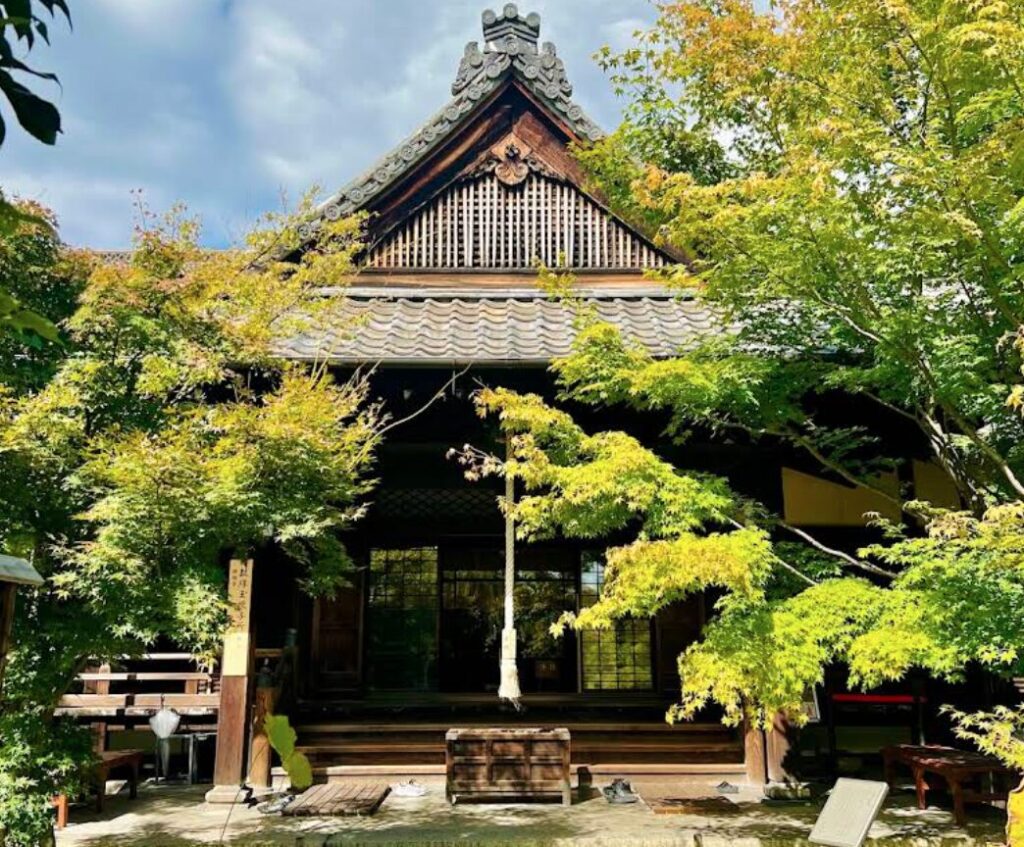
What makes Shōrin-ji especially welcoming for foreigners and beginners is its relaxed atmosphere. The temple provides all necessary materials, including brushes, ink, and tracing sheets, so no prior experience is required. Visitors sit in a peaceful tatami room overlooking a garden and slowly copy the sutra by hand. The goal is not perfect calligraphy, but mindfulness and reflection.
What makes the experience especially beginner-friendly is the atmosphere. You are guided into a tatami room overlooking a quiet garden, where you sit either on the floor or at a table and slowly copy the sutra by hand. There is no pressure to be perfect. The point is simply to slow down, focus, and become absorbed in the rhythm of writing. One traveler described it as “meditative” and noted how peaceful the garden setting felt during the hour-long session.
Shōrin-ji also offers English-language information on its website and experience pages, which makes the process much less intimidating for international visitors. Some sessions even include matcha tea and sweets afterward, turning the experience into a gentle introduction to Japanese temple culture as a whole.
How to get there from Hirakata Station
Getting there from Hirakata Station is surprisingly straightforward:
- Take the Keihan Main Line from Hirakata-shi Station toward Kyoto.
- Get off at Tofukuji Station.
- From there, it’s about an 8-minute walk to the temple.
The entire trip usually takes around 40–50 minutes depending on transfers and timing.
If you are nervous about trying sutra copying for the first time, Shōrin-ji is an ideal place to begin. It feels less like a tourist activity and more like a genuine pause from the pace of travel — a quiet hour spent listening to the sound of brush against paper in the middle of Kyoto.
Sutra Copying at Kyuanji Temple (Osaka)
When people think of Osaka, they usually picture neon lights, packed train stations, and endless food streets. Kyuan-ji Temple offers the complete opposite experience.
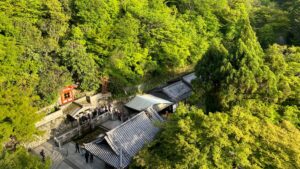
Located in the hills north of Osaka, Kyuanji Temple is surrounded by greenery and has the kind of stillness that makes you instantly lower your voice when you arrive. The temple itself is believed to date back over 1,300 years, giving it a long connection to Buddhist practice and mountain spirituality.
Kyuanji has become increasingly popular for guided sutra-copying and meditation experiences, especially among international visitors. Unlike some temples where you are expected to navigate everything yourself, the sessions here are often structured and led by temple staff or the abbot. This makes it especially good for beginners who may feel uncertain about etiquette or procedure.
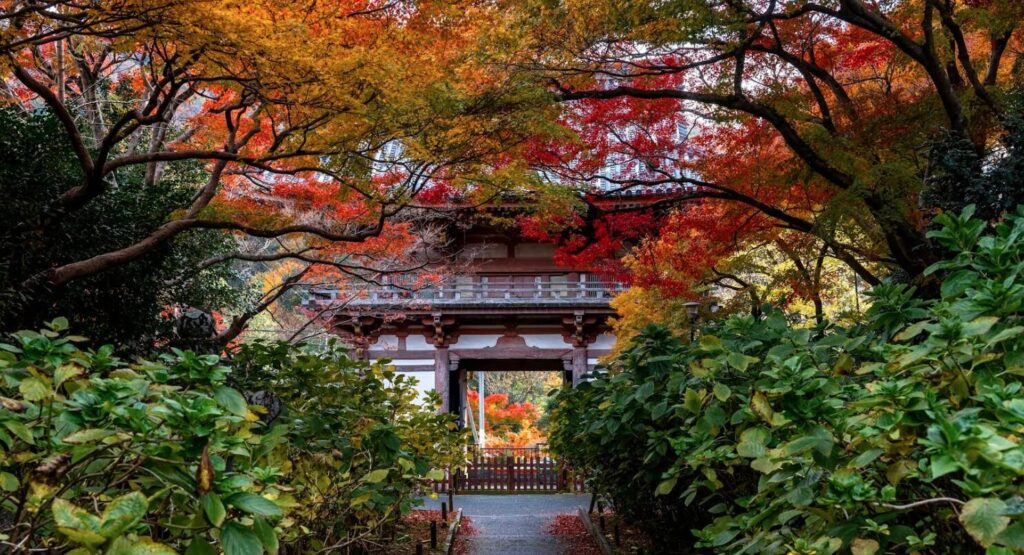
The sutra-copying experience is intentionally slow and reflective. After a short introduction, visitors sit quietly and begin tracing the sutra character by character. Even if you cannot read Japanese or classical Chinese, the repetitive motion quickly becomes calming. Many people are surprised by how absorbing it feels; after a few minutes, you stop worrying about handwriting and simply focus on breathing and movement.
For foreigners, Kyuanji is particularly approachable because experiences are often marketed internationally through travel platforms, meaning instructions and booking systems tend to be easier to navigate than at smaller local temples. Some experiences also combine shakyō with Zen meditation and access to hidden temple treasures, giving visitors a broader understanding of Japanese Buddhist culture.
Another advantage is the setting itself. Kyoto temples can sometimes feel busy, especially during peak travel seasons, but Kyuanji feels more secluded. Instead of crowds and tour groups, you are surrounded by trees, mountain air, and the sound of birds. It feels less like an attraction and more like a retreat.
How to get there from Hirakata Station
From Hirakata Station, the easiest route is usually:
- Take the Keihan Main Line toward Osaka.
- Transfer toward the Hankyu or JR lines depending on your route.
- Continue toward the Ikeda area and local transport connections for Kyuanji Temple.
The journey typically takes about 60–90 minutes depending on connections and bus timing.
Because the temple is slightly outside central Osaka, checking Google Maps on the day of travel is recommended for the smoothest route.
For travelers wanting a quieter, more reflective sutra-copying experience away from the busiest tourist districts, Kyuanji offers a chance to slow down completely.
F.A.Qs about Sutra Copying
Not at all. While shakyō is rooted in Buddhism, many people try it for cultural, artistic, or mindfulness reasons. Temples across Japan regularly welcome beginners and non-Buddhists.
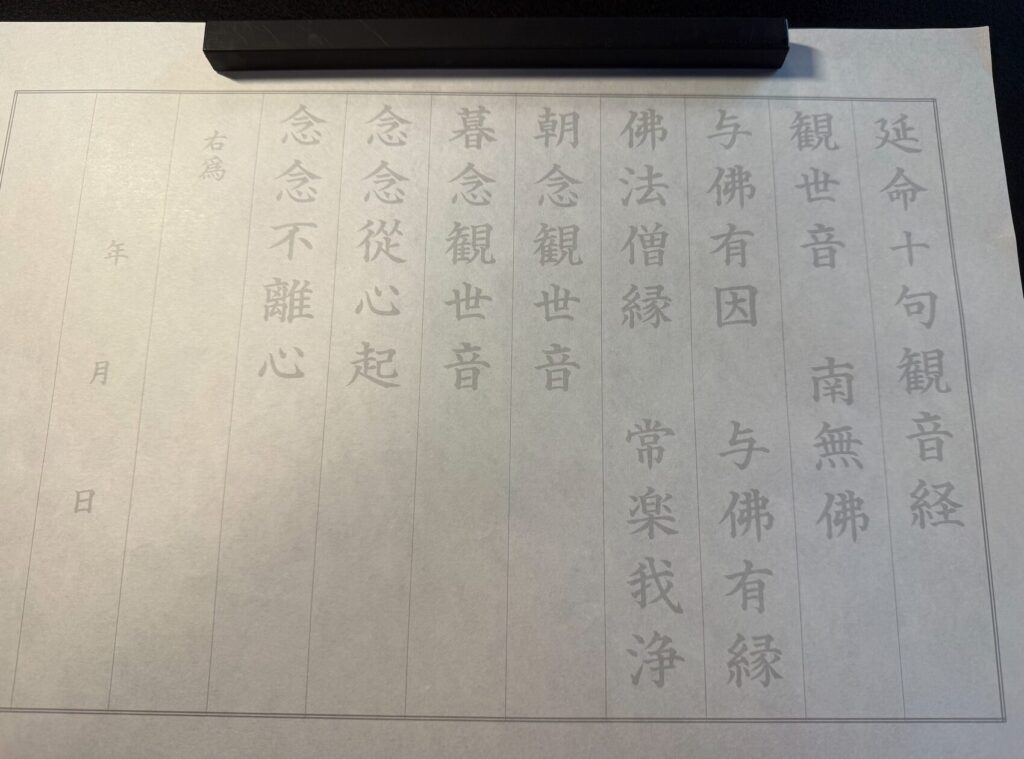
Traditionally, you use a brush, ink, and special paper. However, beginners often start with brush pens and pre-printed sheets where the characters are lightly outlined for tracing.
Yes. Shakyō is not about perfection. Mistakes are seen as part of the process, reflecting your state of mind in that moment. The intention behind the work matters more than flawless writing.
Definitely not. While shakyō is connected to calligraphy, it’s not about artistic mastery. Beginners are encouraged to focus on mindfulness rather than technique.
Yes, in a practical sense. The slow, repetitive writing encourages concentration and calm, similar to seated meditation practices.