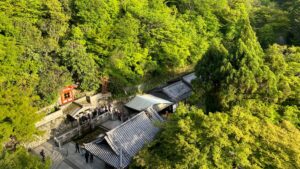

Japan is the land of countless unspoken rules, and when I say unspoken, I mean it. Because of the politeness and indirectness of Japanese culture, you won’t be corrected by the Japanese even when breaking the most important unspoken rules. But that doesn’t mean these rules aren’t vital if you want to be a respectful tourist in Japan. Consider this a survival guide to avoiding secondhand embarrassment and decoding the secret rules that everyone else magically knows in Japan.
Train etiquette
If you come to Japan, your closest train station will inevitably become your bestie. Trains are used to get everywhere in Japan, so learning the proper etiquette is VITAL.
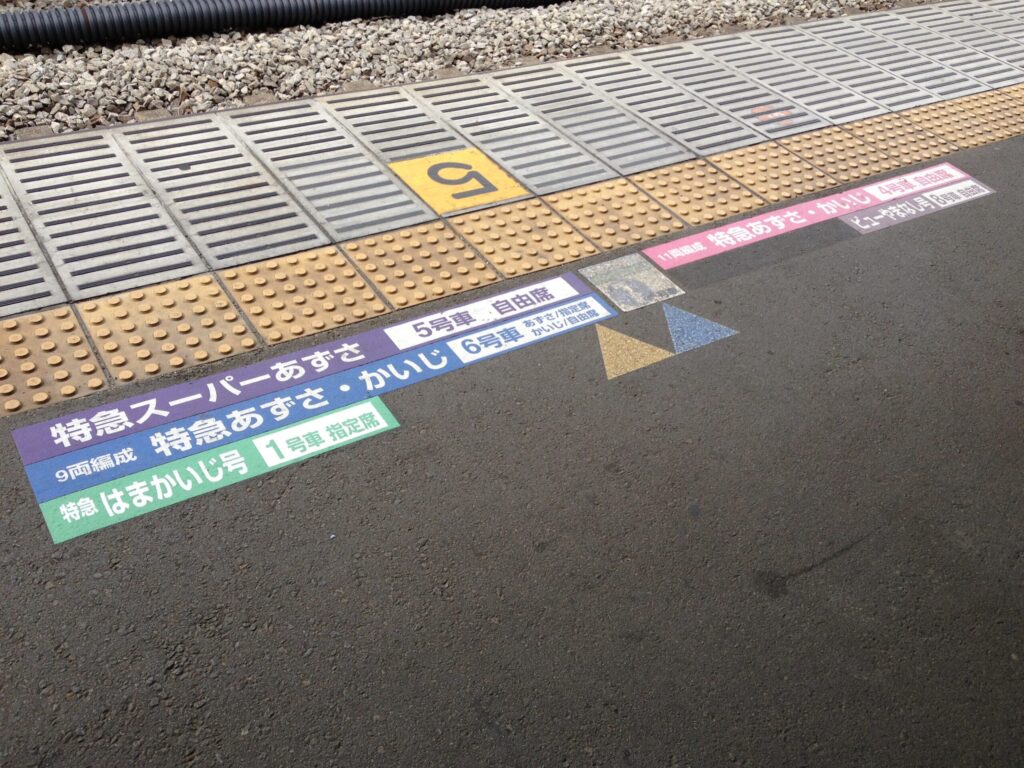
When waiting for the train, simply follow the locals. If everyone else is lining up, line up behind them and don’t cut the line. Sometimes there are different lines for different trains, but in that case you can usually find signs on the floor telling you which train each line is for. So just observe your surroundings a little, and follow the locals. As the Japanese would say, read the air.
SHHHH. Be quiet! When you step onto a train, imagine it’s the silent section of a library. Again, Japanese people won’t shush you or tell you to be quiet, but you’ll notice there are 20 people around you silently judging you. If you need to talk, do it quietly to show consideration to the people around you.
The same goes for talking on the phone, don’t do it. You’ll even often see signs on public transport saying ‘Please don’t talk on the phone’.
Rules of walking
Japanese people are absolute pros in reading the smallest changes in body language. There’s a silent choreography where everyone somehow knows who will move, who will slow down, and no one ever bumps into anyone.
For us who are ‘not in the know’, there are a few tips. Follow the locals and be confident in where you walk. The norm of where people walk switches from city to city, so if there are others ahead of you walking in the same direction, bingo. Just stay behind them. If not, try to see where others are walking and be confident in your lane. Then the locals can read that you will stay in your lane and understand to move.
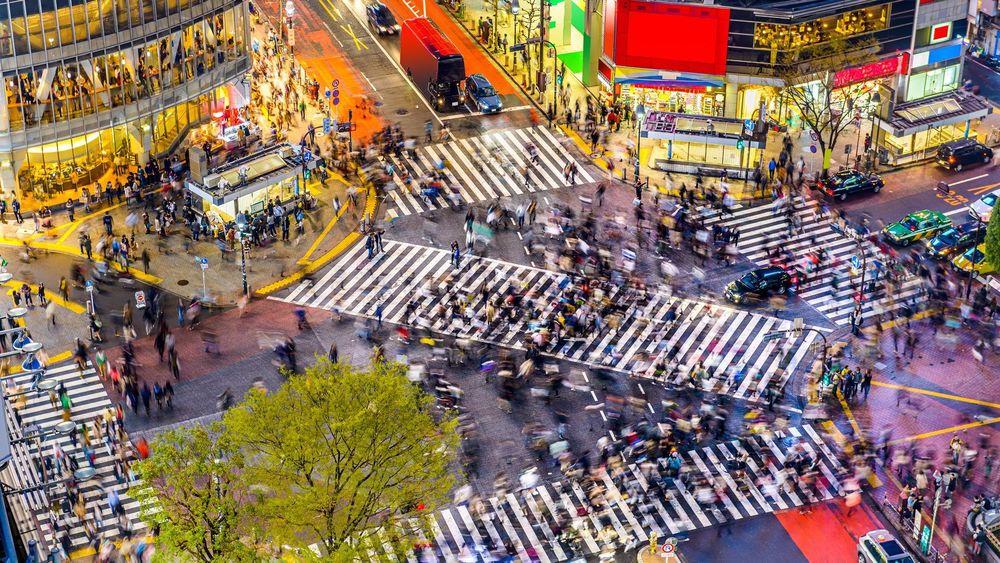
For Tetris players, welcome to Japan. This is what you’ve been training for your entire life.
Something else to keep in mind is that eating and walking is a huge no-no in Japan. If you need to eat on the go, try to find a bench or a nice little corner to stand in (and don’t you even dare think about eating on the train).
Also, keep in mind that any and all trash you have, you keep with you most likely until you make it back to your hotel. Public trash cans are pretty nonexistent, and people carry their trash with them.
Pro extra polite tourist tip: When taking pictures, try to pull over to the side of the road or take your photos on the go. Try not to stop in the middle of the street to avoid blocking people from walking.
Gestures
DO:
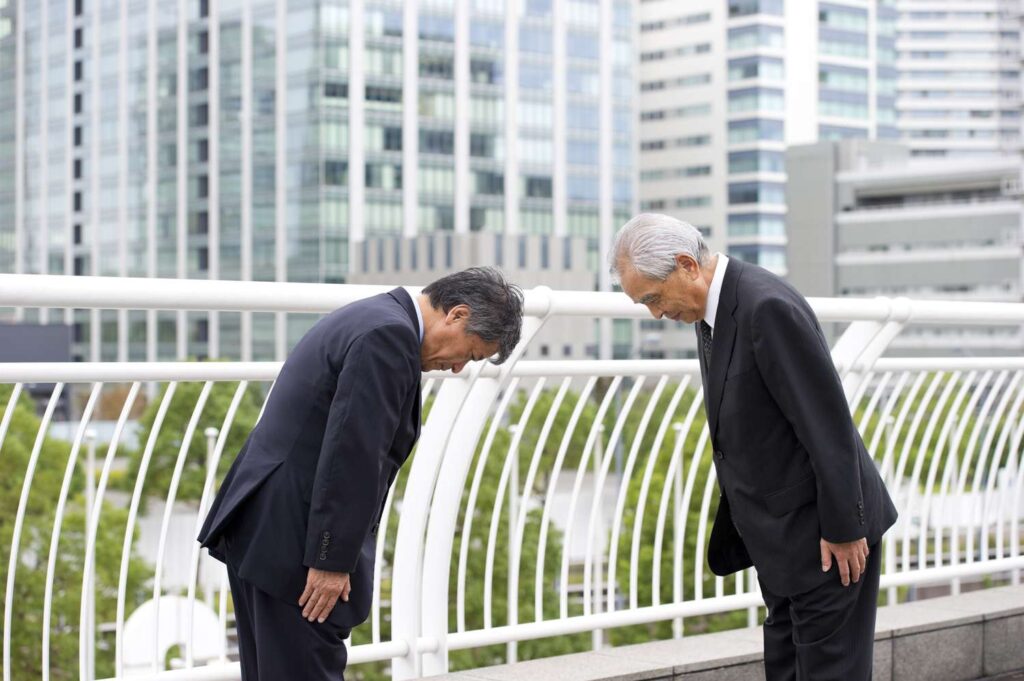
You might know about the bowing culture in Japan, which is already new to many of us when coming to Japan. Don’t stress it though, most of the time a simple nod of the head is all you’ll use. Simply consider that the deeper the bow, the more you want to emphasize what you are saying.
If you’re genuinely sorry or very thankful, you can bow a little deeper than the one you use when grabbing a grocery receipt. Just don’t go full anime and bow at a dramatic 90 degrees.
DON’T:
Pointing with your finger is a tough habit to break for someone who has been doing it all their life (might be speaking from experience here), but in Japan, it is a rude and accusatory gesture. Instead, when pointing at something, use your whole hand, which is considered much more polite.
When pointing at yourself, put your index finger on your nose. This was very confusing to see at first, but it is actually very cute.
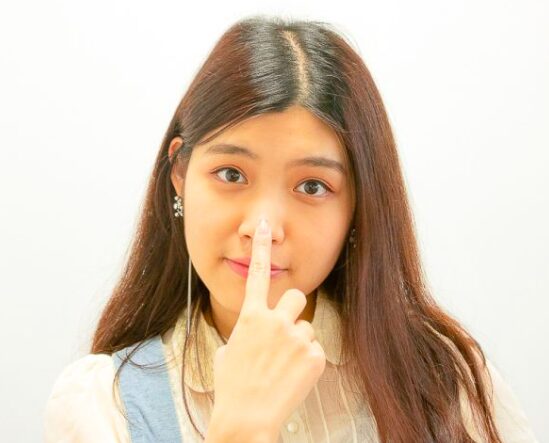
There are many hand gestures you can unlock and those of you who are gesture enthusiasts can read more about them here: https://www.likejapan.com/en/life/10-gestures/
Clothes
In Japan, overly revealing clothing (especially in the upper body) is frowned upon. Expectations and views on this also vary by city. Generally, the smaller the city or town, the more I’d put thought into keeping clothing on the modest side. And if you’re planning to go to local temples, cover up accordingly – at least your shoulders and knees as a basic rule of thumb.
Wear socks! You’ll often have to take off your shoes when entering temples, houses, or even bars, so make sure to always wear socks. Or at least take them with you just in case.
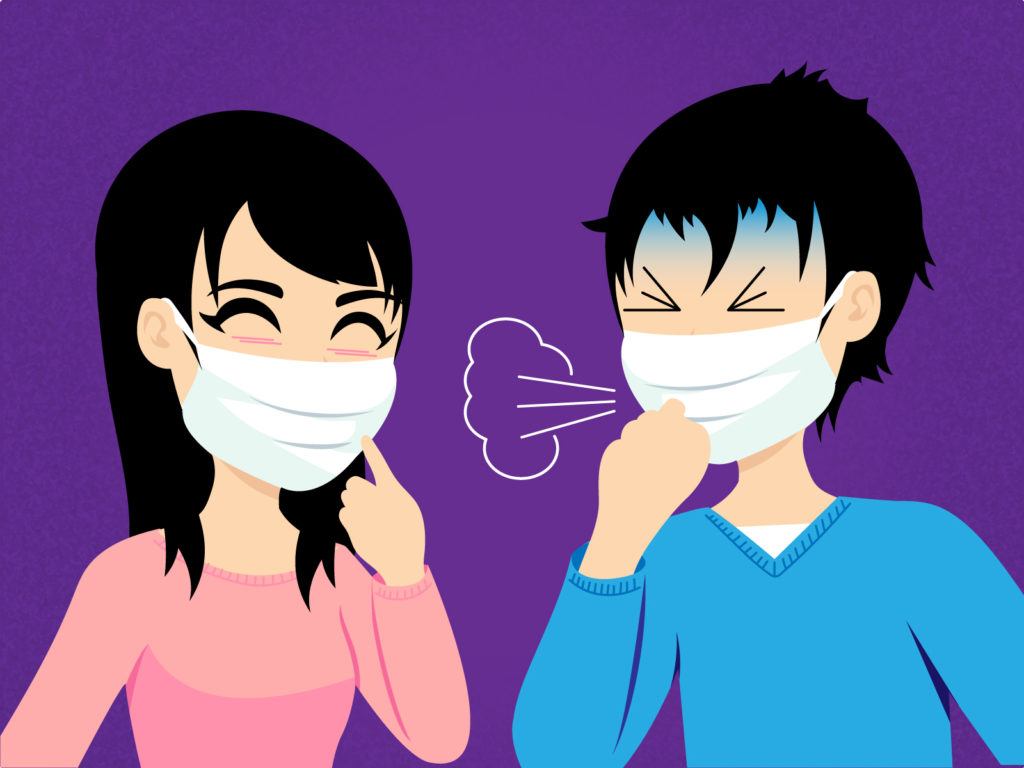
For those who stocked up on too many masks during COVID, people here wear masks in public! Not everyone wears a mask, but around half of the people do, especially in public transport. If you feel even slightly sick and are still planning to go out, wearing a mask will help prevent many people from suffering the same fate.
Time
Be on time! The basic rule in Japan is that if you’re 5-10 minutes early, you’re on time. If you’re on time, you’re late. It might seem silly, depending on the culture you are coming from, but in Japan, time is sacred. Schedules are honored, and lateness can ruin your reputation very quickly.
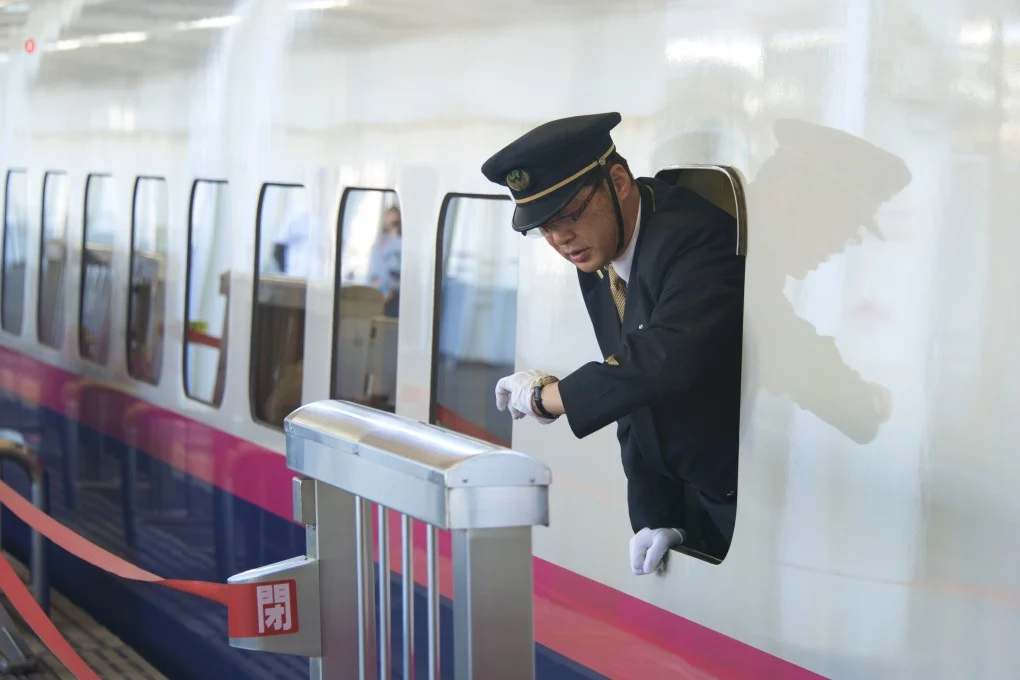
When trains are late, Japanese train conductors even hand out paper slips to apologize and for you to use as proof that being late wasn’t your fault. If that doesn’t show how seriously Japanese people take punctuality, I don’t know what will.
Reading the Air
Japanese culture is very focused on reading the tones of conversations and listening to what they mean, not what they say. It’s more about what is not being said, instead of what is.
Because of this indirect style of communication, Japanese people also avoid saying “no”. Instead, they might say: ‘next time…’, ‘I’ll think about it’, or ‘that might be difficult’. These phrases most likely mean a firm no, but they are phrased indirectly. Don’t stress about it; foreigners aren’t held to the same high standard when it comes to understanding these differences, but it’s important to be aware of them.
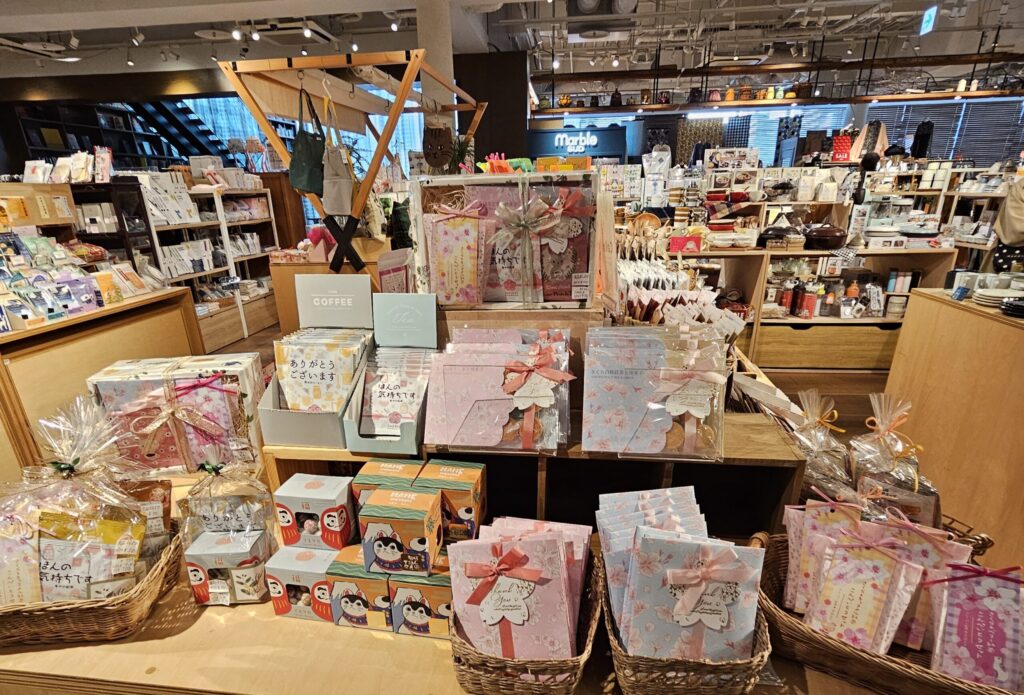
Gifts are also an important part of Japanese politeness culture. When meeting people for the first time, or returning from a trip, it is polite to bring small souvenirs to show gratitude and respect. When receiving gifts, it is polite to refuse them a few times before accepting them. This shows gratitude and humility.
Another thing to deny is compliments. The way to humbly accept a compliment in Japan is to deny it, then say a small thank-you. Directly accepting a compliment in Japan almost gives off the vibe that you do, in fact, think you are the best person in the world.
Check out this article, which dives deeper into the Japanese art of ‘reading the air’.
All these unspoken rules may seem confusing and overwhelming, but try not to stress too much. Japanese people are usually very patient and understanding with foreigners, and even showing a little respect and effort will go a long way. Just remember to be polite and respectful to those around you, and enjoy learning about different styles of communication and behavior in Japan!
FAQs: Unspoken Rules in Japan
Keep your voice down and avoid phone calls on the train. If you have bulky hiking gear, place it in overhead racks or keep it close to avoid blocking paths. Always follow local etiquette by lining up properly on the platform before boarding your train.
Yes! Always pack out your trash, as public bins are nonexistent. Greet fellow hikers with a friendly “Konnichiwa” (hello) or “Otsukaresama desu” (thank you for your hard work). Stick strictly to marked paths to protect the local environment and respect sacred mountainside shrines.
Opt for modest athletic wear. While hiking clothes are functional, avoid overly revealing tops when passing through local villages or mountain temples. Bring clean socks along, as you might need to remove your shoes if you stop by a traditional trailside teahouse or sacred site.
Eating while walking on urban city streets is strongly frowned upon, but it is completely acceptable on nature trails. Sit at designated rest areas or benches to enjoy your bento or onigiri, and ensure you store all food wrappers securely inside your backpack.