

written by Natasha Kaniel-Shears
In Japan, people use honorifics that are polite suffixes or prefixes to show respect, familiarity, or even cuteness to others. This system is also known as keigo. Daily life relies on honorifics, and it’s important to use the correct form in order to avoid accidentally offending someone!
The honorifics system may seem complicated and confusing at first, but consider this your guide to perfecting the art of Japanese honorifics. Let’s ensure that you know exactly which terms to use and when.
Japanese speakers add suffixes to the end of names all the time in daily conversations, so let’s start there!
Suffixes
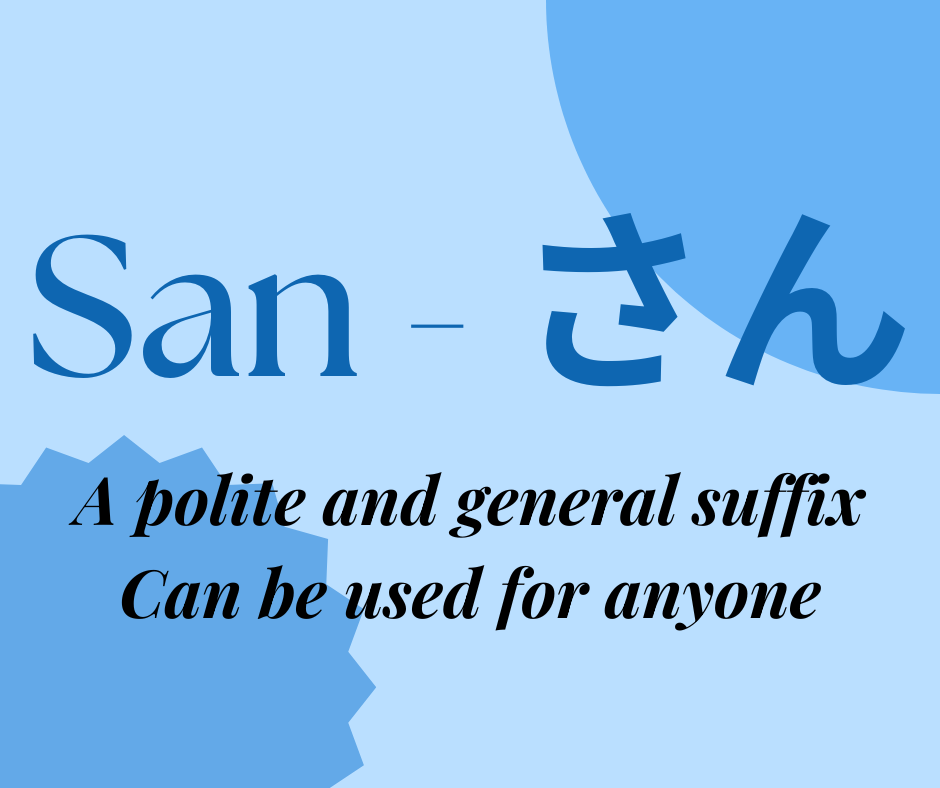
San – さん
San is arguably the most common honorific suffix in Japan; it is gender-neutral. English speakers would roughly translate it as ‘Mr/Mrs/Miss/Ms’, but Japanese speakers use san far more frequently than its English equivalents.
Unless someone tells you that you can drop the honorific suffix (known as yobisute), you should always use san. This is a safe, reliable honorific which is essential for showing politeness towards equals or acquaintances.
You can also use san to create occupations or titles by adding the suffix to a place – for example, パン屋さん (pan-ya-san) means ‘the baker’, because パン屋 (pan-ya) is a bakery (literally ‘bread shop).
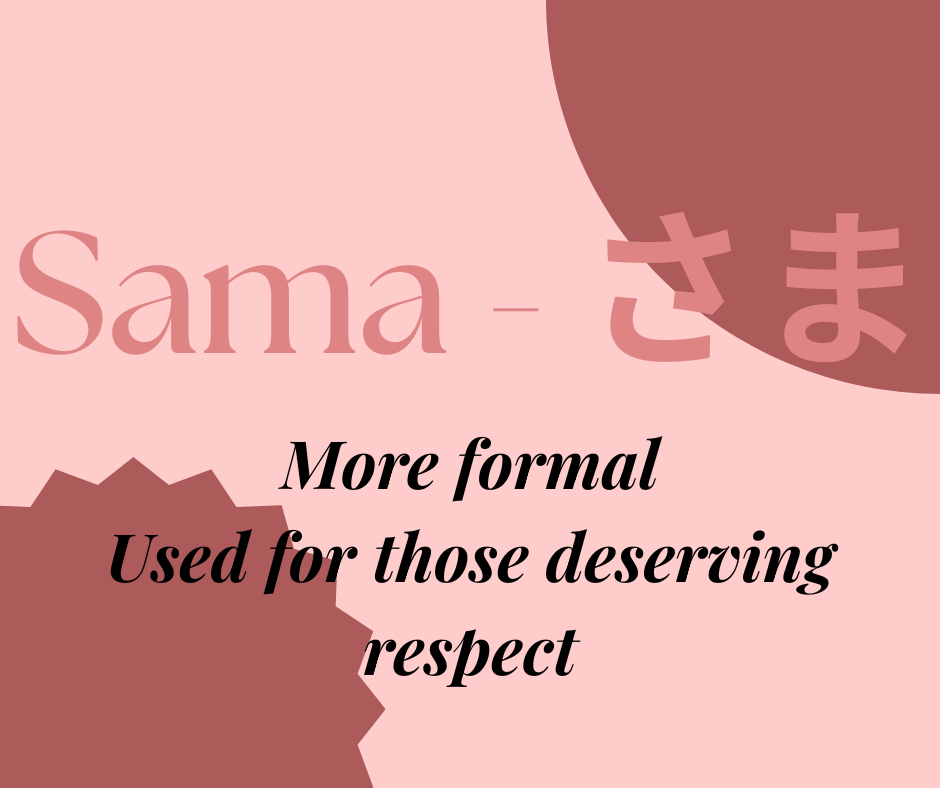
Sama – さま
Sama is more formal than san as it is used for someone who deserves respect or has a higher ranking than you. For example, businesses often use sama to refer to customers, or it can also be used to refer to royalty or deities.
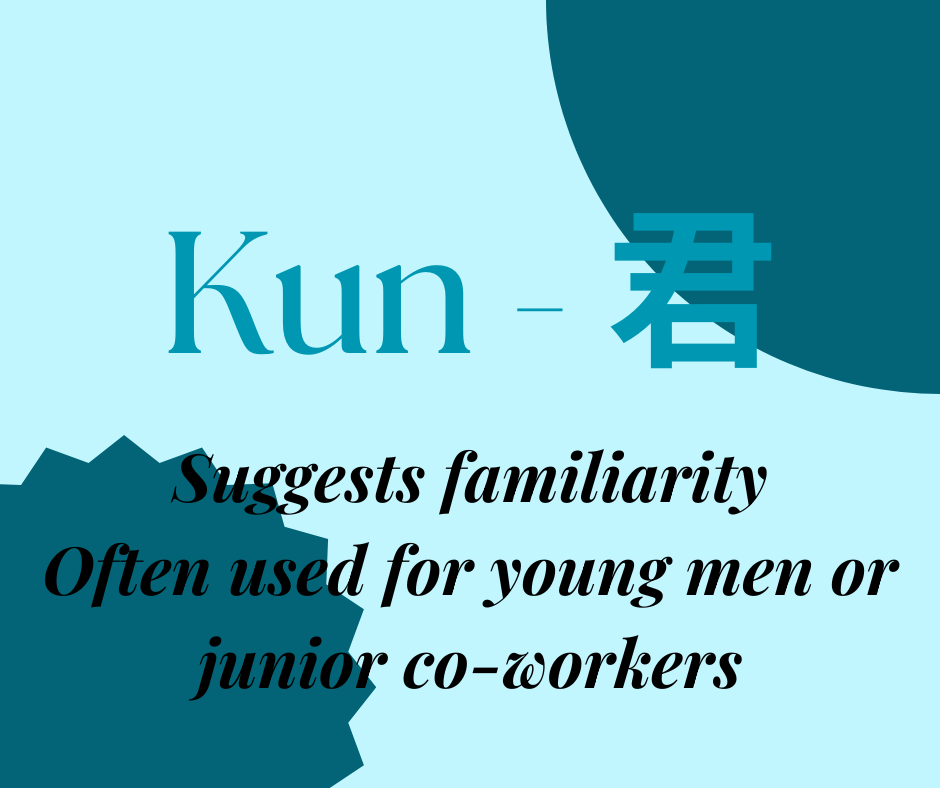
Kun – 君
You might recognise this one from your favourite anime or manga! People with a higher ranking or status often use kun to refer to young men or junior co-workers.
Kun demonstrates familiarity – it is roughly translated as ‘buddy’, but it’s important to remember the underlying tones of hierarchy. For example, managers use this term when referring to junior male employees, or it can even be used between friends.
Sometimes it might be used for women of a junior status or students, but kun should not be used between women or when addressing a superior.
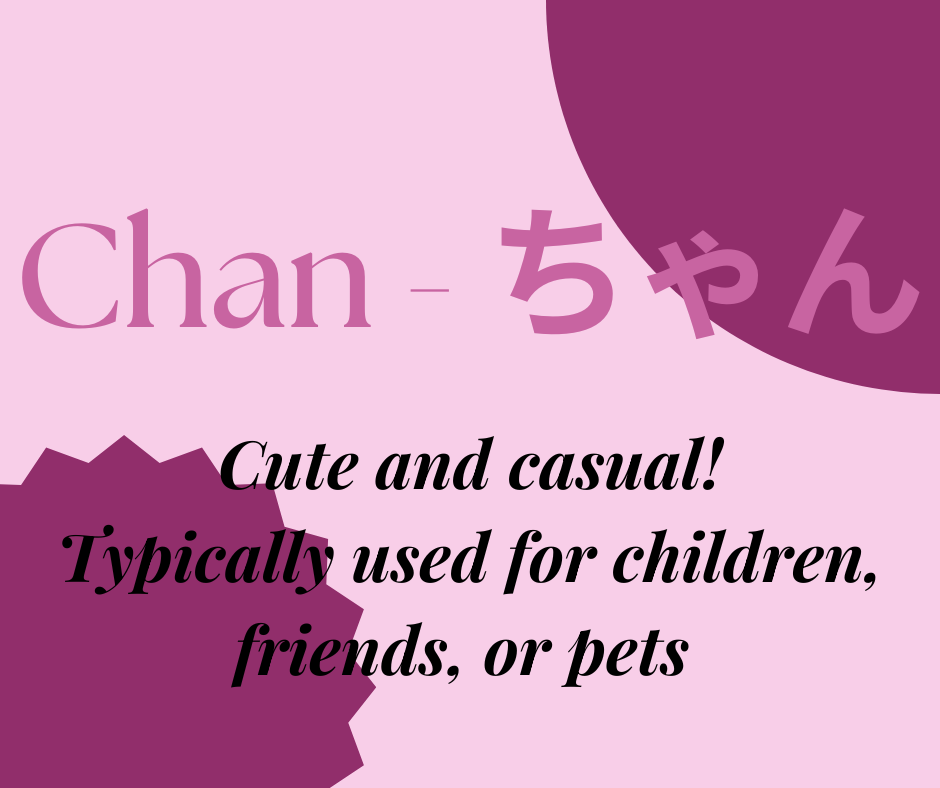
Chan – ちゃん
Chan is a cute and casual term of endearment! It originates from children mispronouncing ‘san’ and is now commonly used for children, young women, and pets. It can also be used between friends or partners. This term should not be used to address strangers or superiors, as it is more intimate and endearing.
Although it’s a more feminine term, it can also be used for males. For example, the famous actor Arnold Schwarzenegger is often called Shuwa-chan in Japan, as it is shorter and shows fondness!
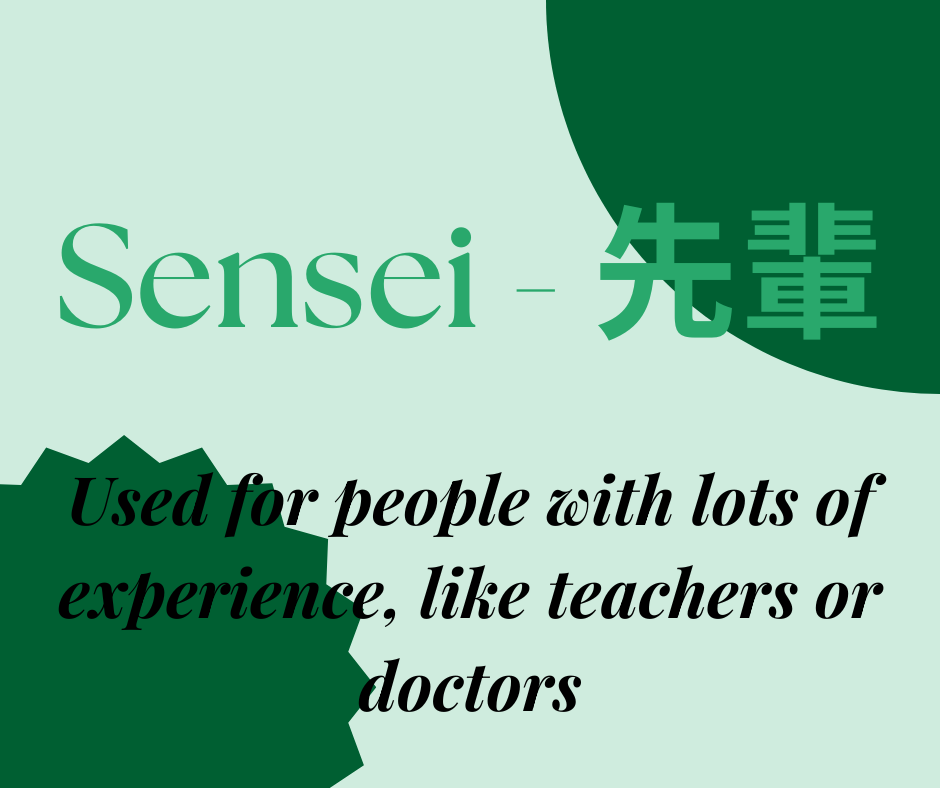
Sensei – 先輩
Sensei is often used to refer to someone with extensive experience. Although you might recognise this term as ‘teacher’, it can also be used for doctors, lawyers, or artists. Sensei literally means ‘previous born’, but it means that someone has more experience and knowledge than you (they do not necessarily have to be older than you).
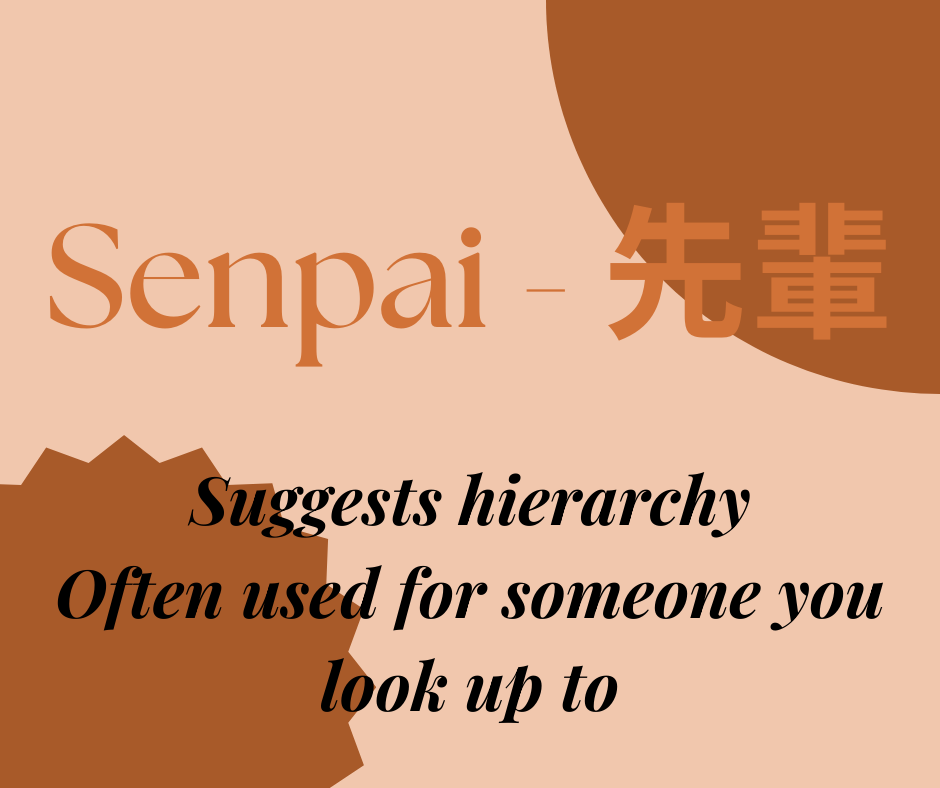
Senpai – 先輩
This is another one that you might have come across in anime or manga. Senpai is used for personal but hierarchical relationships, such as at work or school. It suggests more experience or a higher ranking, and is often used to refer to a mentor or someone you look up to.
It can be used in formal situations, such as for a more experienced employee you admire, or in more informal situations, such as to express admiration for a friend who is highly skilled.
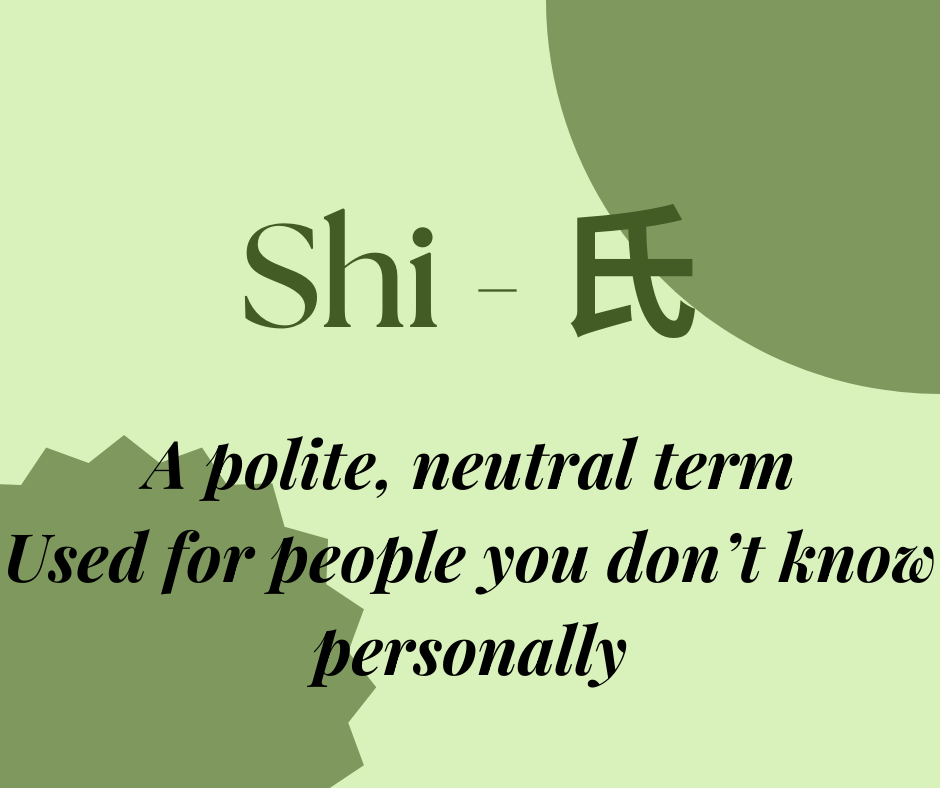
Shi – 氏
Not to be confused with shi, meaning death, but shi as a suffix is a polite and formal way to refer to someone who is distant. You might hear this term in the media, such as news, because it is often used for strangers or public figures you have not met directly.
For an overview of Japanese honorific suffixes, check out the video below:
Polite prefixes
Now that we’ve explored the meanings and uses of the most common honorific suffixes in Japan, let’s take a closer look at how and when to use polite prefixes.
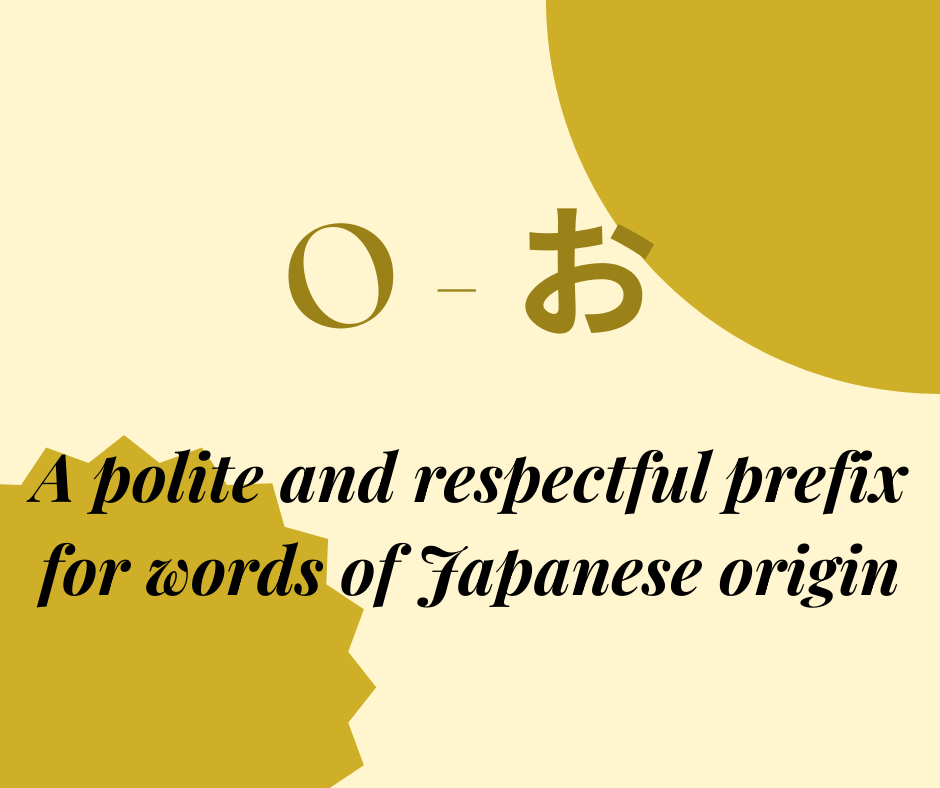
O – お
O is a prefix that is used to show politeness or respect for words of Japanese origin (kunyomi). It’s very common to use o before family members to show respect, or before food or drink items when ordering at a cafe or restaurant, such as o-mizu.
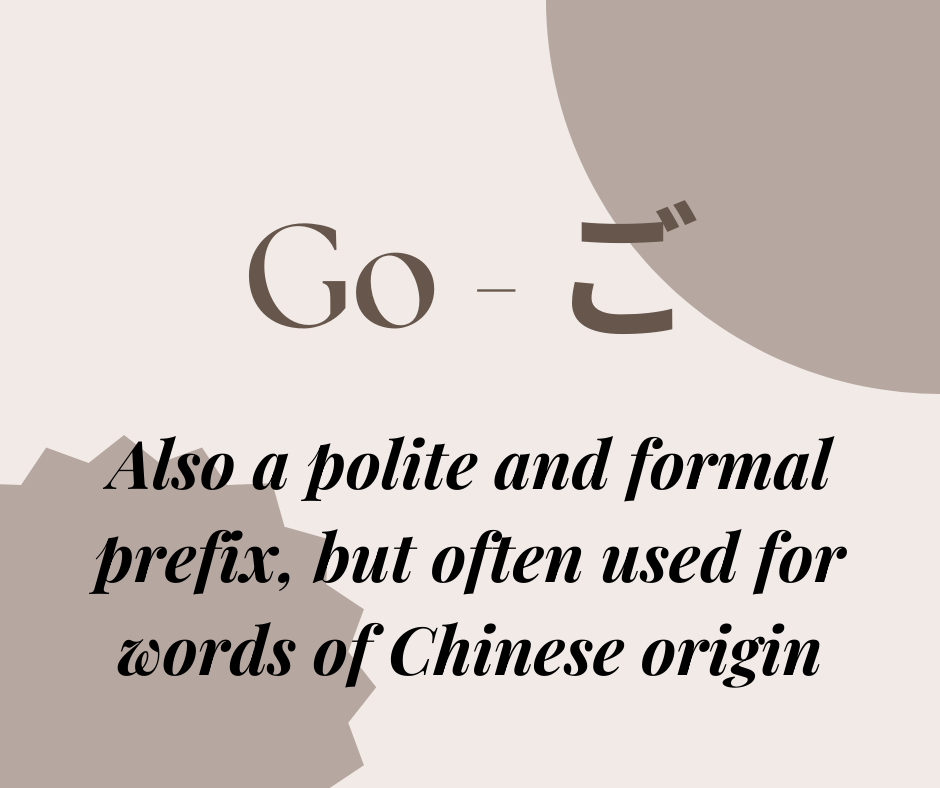
Go – ご
Go is similar to the prefix o, but it is used before words of Chinese origin (onyomi). It is also used to show politeness and respect. For example, go-kazuko is a more polite way of referring to one’s family.
To learn more about Japanese prefixes, check out the following video:
FAQs: Japanese honorifics and language etiquette
Keigo is an important honorific system that focuses on how language can convey politeness, respect, and familiarity, all vital aspects of Japanese culture.
To begin with, it is more polite to add the suffix to the person’s last name (family name). As you get to know them over time, you can switch to using their first name. Always use an honorific unless the person tells you to drop it.
Chan and kun are the most common options for referring to close friends and family, especially those who are younger than you or whom you want to show affection. For example, Obaa-chan is a sweet way to address your grandmother.
For strangers, san is usually the safest option, although you can use sama if the person you are talking to is of a higher status than you. For senior professionals, senpai is a great general term, while sensei can be used for more specialised professions. Avoid using kun or chan for strangers or higher-ranking colleagues.
If you forget an honorific or accidentally use the wrong one, don’t panic! All you need to do is briefly apologise (try not to over-apologise) and correct yourself. If you’re unsure which honorific to use, san is always a safe bet! Also, avoid using an honorific when referring to yourself, as it may come across as rude or arrogant.